
The quick answer
Exercise is a core treatment for hip osteoarthritis.
NICE recommends therapeutic exercise tailored to the individual. These five movements are practical starting examples for mobility and strength.
Before you start
Work within a comfortable range.
Some discomfort can occur during or after exercise, but it should settle. Stop an exercise if pain keeps worsening or becomes more continuous.
Complete 3 sets on 5-7 days each week. Use the repetition range shown under each exercise.
Exercise 1 · Comfortable movement
Supine heel slide
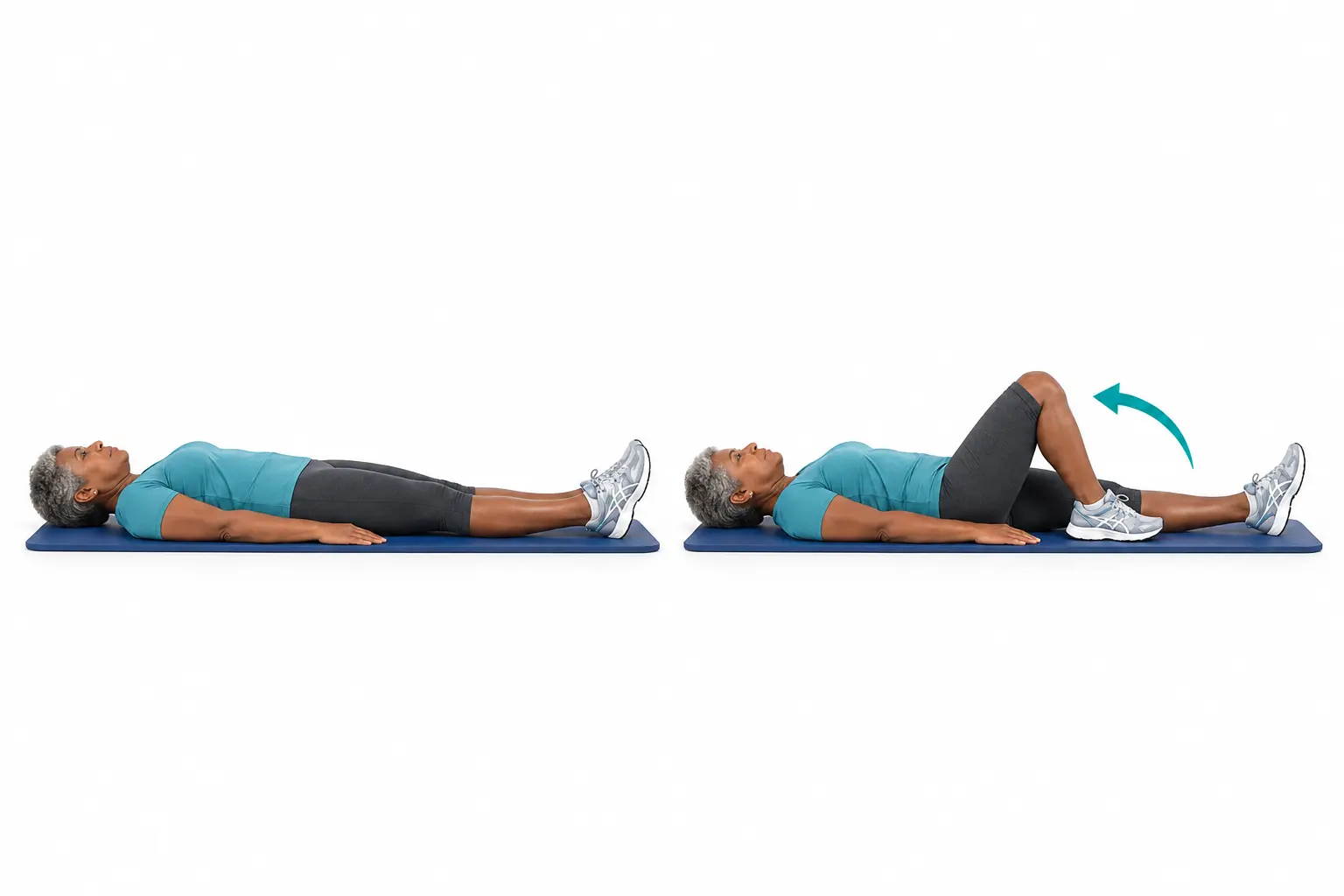
- Lie on your back with both legs straight and relaxed.
- Keep the heel supported and slide it towards your bottom, bending the knee as far as feels comfortable.
- Slide the heel away again until the leg is straight.
Exercise 2 · Hip movement
Straight-leg hip abduction
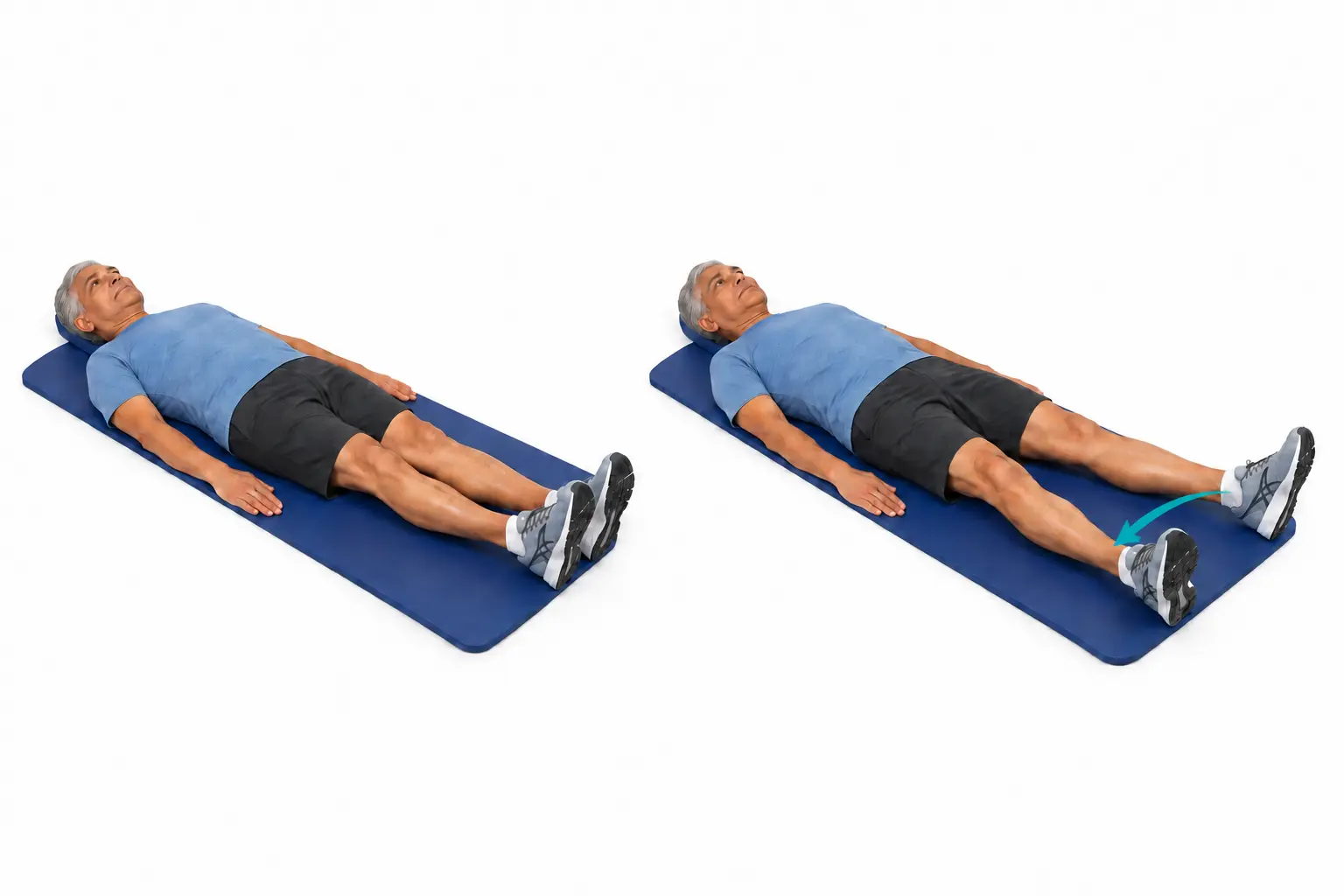
- Lie flat on your back on a bed or exercise mat with both legs straight.
- Keeping the knee straight and toes pointing upwards, slide one leg out to the side as far as feels comfortable.
- Return the leg slowly to the middle.
Exercise 3 · Inner-thigh stretch
Lying two-leg adductor stretch
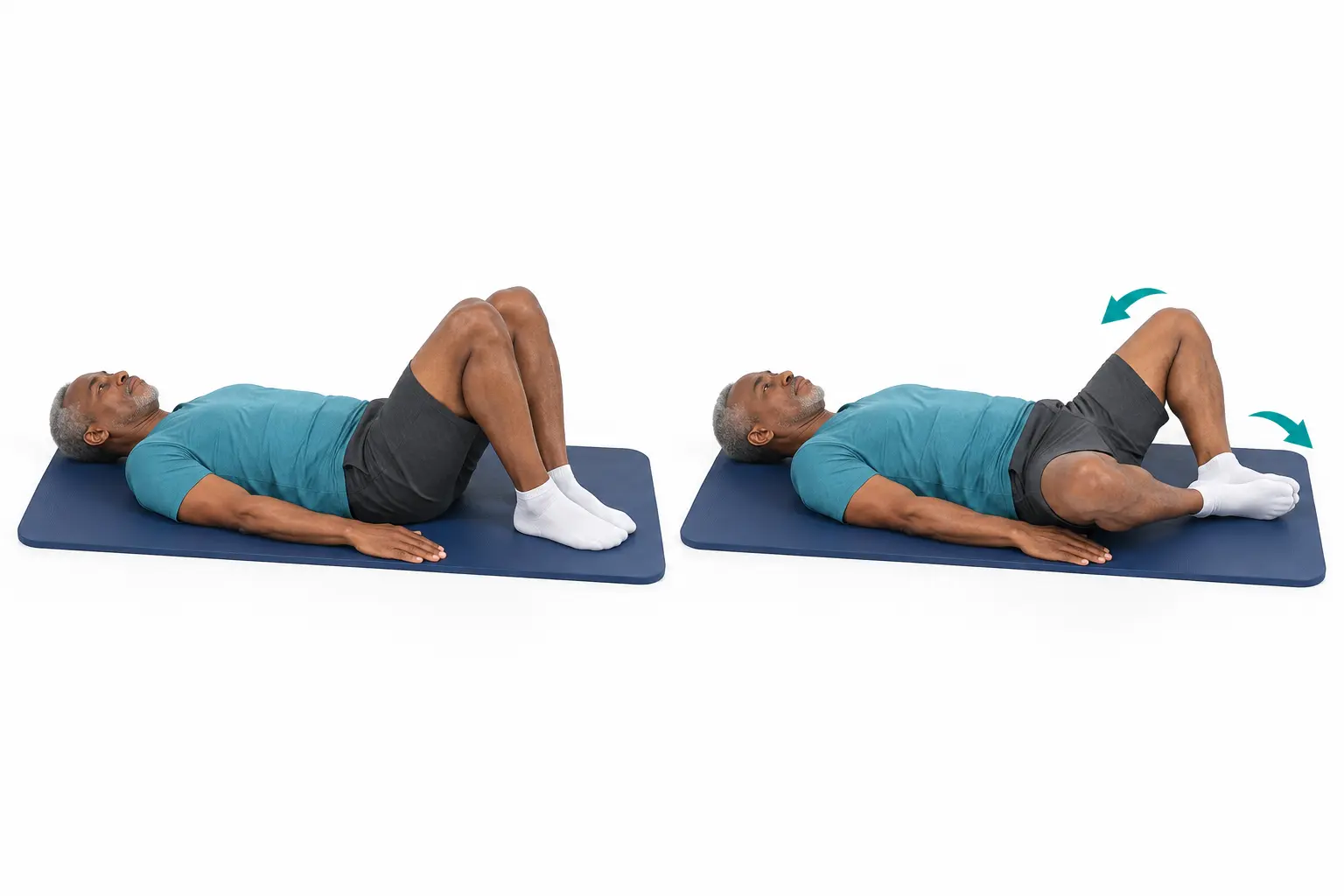
- Lie on your back, bend both knees and bring your feet close together.
- Allow both knees to drop outwards in a comfortable, controlled movement.
- Bring the knees back towards the middle before repeating.
Exercise 4 · Hip and trunk strength
Basic bridge
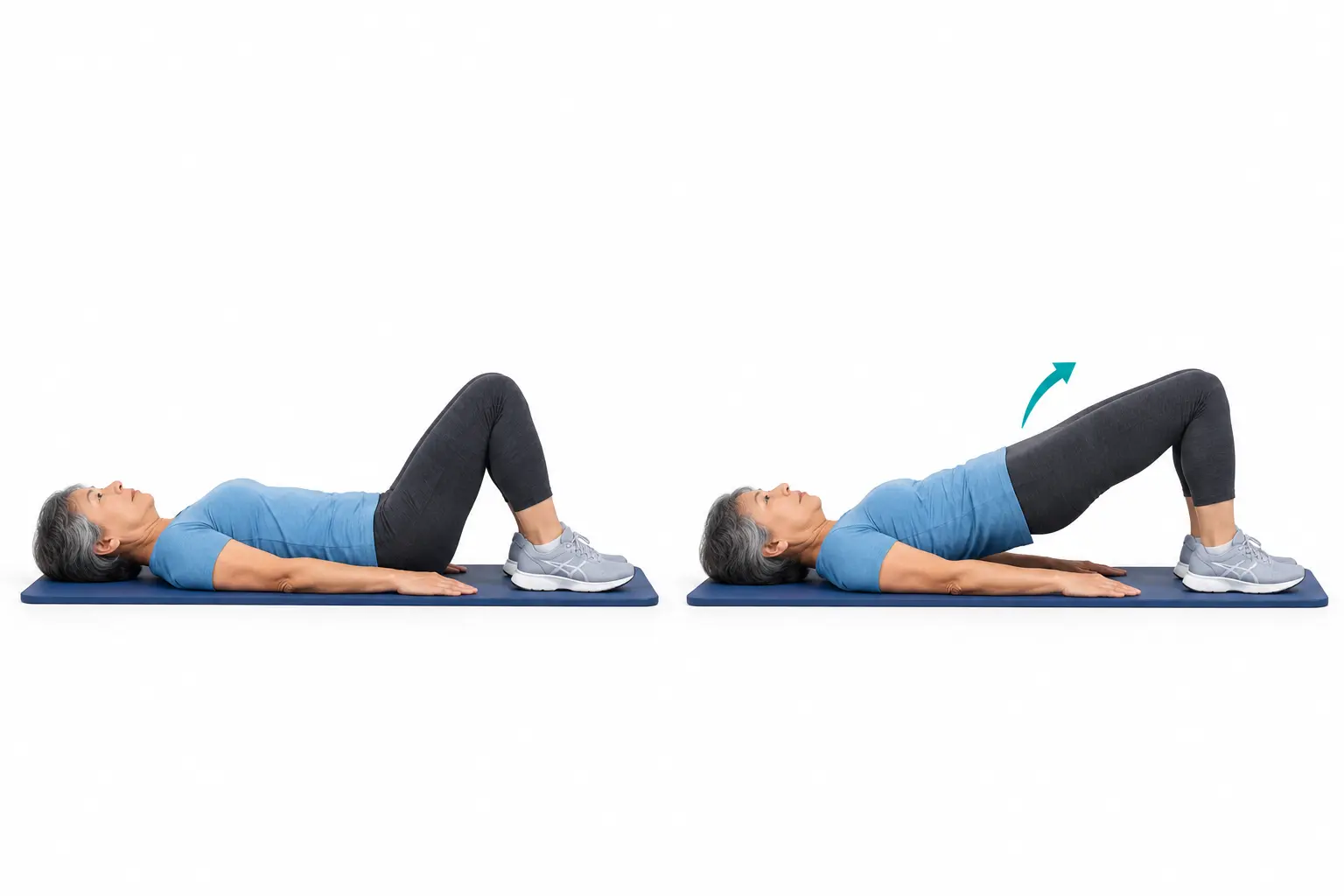
- Lie on your back with both knees bent, feet flat and arms by your sides.
- Gently tighten your stomach and squeeze your bottom muscles.
- Lift the hips to a comfortable height without over-arching the lower back, then lower slowly.
Exercise 5 · Everyday strength
Sit-to-stand without using your hands
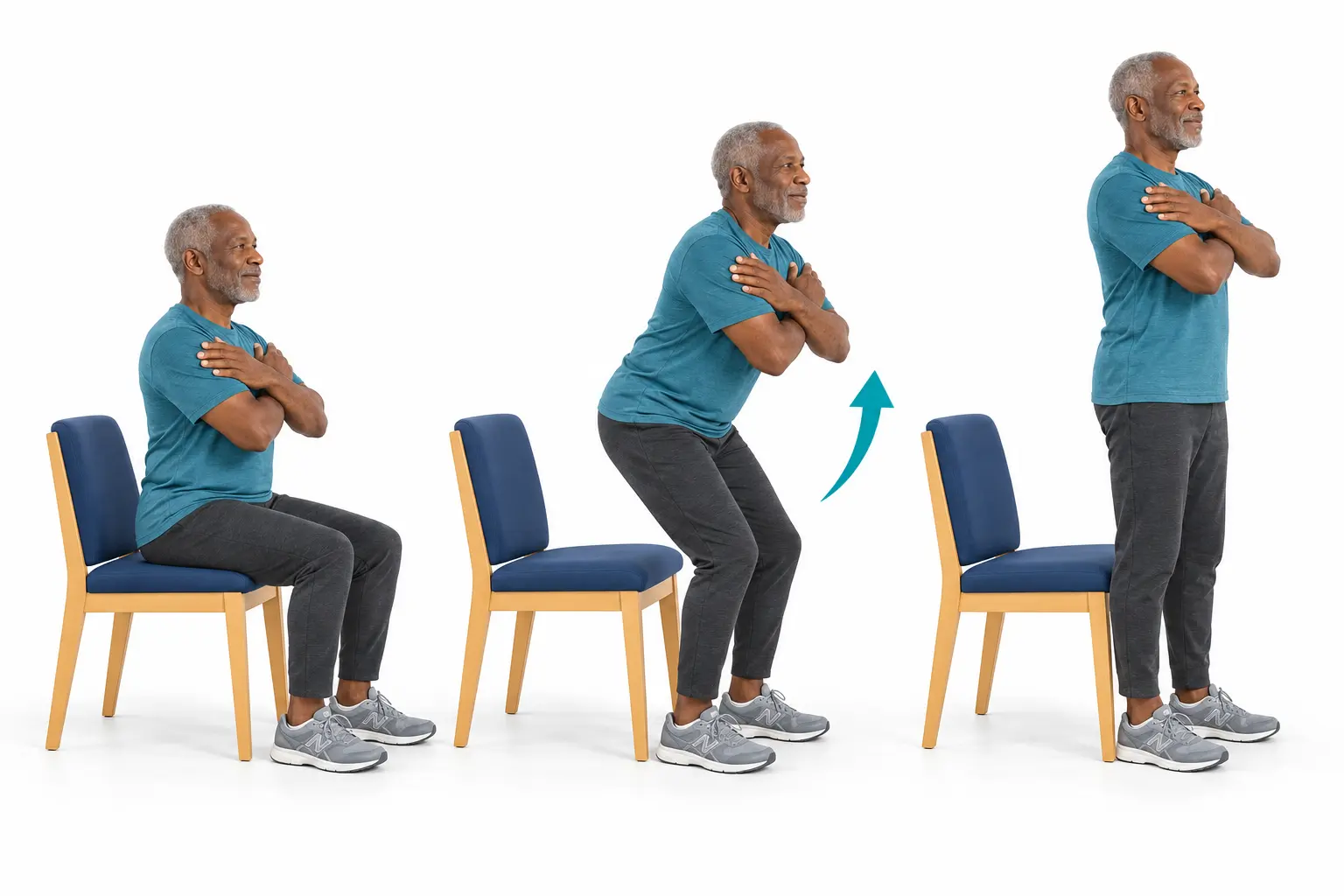
- Sit upright near the front of a stable chair with your feet about hip-width apart and arms across your chest.
- Lean forwards and push through your legs to stand upright.
- Sit back down slowly and under control. Use one or both arms for assistance if needed.
Common questions
Hip osteoarthritis exercise FAQs
Can exercise make hip osteoarthritis worse?+
Some discomfort can occur when you begin exercising, but it should settle rather than become increasingly painful or continuous. Stop the exercise and seek advice if symptoms keep worsening.
Are these hip exercises suitable for everyone?+
These are general starting exercises. Recent injury, inability to bear weight, marked loss of movement or severe unremitting pain may need assessment before you continue.
How often should I do these hip exercises?+
The supplied programme uses 3 sets on 5 to 7 days each week. Complete 5 to 15 repetitions for the heel slide, hip abduction and bridge, and 5 to 10 repetitions for the adductor stretch and sit-to-stand.
Evidence used
Sources and further reading
- NICE NG226: Osteoarthritis in over 16s - recommendations
- OARSI recommendations for therapeutic exercise in knee and hip osteoarthritis
Published and clinically reviewed 20 September 2026. This page will be reviewed when material guidance changes, or by September 2027.