
The quick answer
The products are different, but a bigger dose does not automatically mean a better result.
Hyaluronic acid injections vary in structure, source, concentration, volume, injection schedule and added ingredients. These differences can affect suitability and practical decision-making, but current evidence does not identify one brand as the reliable best or longest-lasting option for everybody.
First principles
What is a hyaluronic acid injection?
Hyaluronic acid is naturally present in synovial fluid—the fluid that helps a joint move smoothly. In osteoarthritis, the joint environment and the properties of this fluid can change. A viscosupplement injection places a manufactured hyaluronan preparation directly into the joint with the aim of changing symptoms.
A worthwhile response might mean less pain, easier walking or improved tolerance of rehabilitation. It is not a cartilage-regrowing treatment, it does not reverse osteoarthritis and it cannot guarantee that joint replacement will be avoided.
What actually changes
Seven differences between HA products
- 01Linear, cross-linked or stabilised structure
Cross-linking or stabilisation changes the physical behaviour of the gel and may slow breakdown. It does not guarantee greater clinical benefit.
- 02Molecular weight and concentration
Products contain different sizes and concentrations of hyaluronan. These numbers cannot be read as a simple potency ranking.
- 03Total dose and volume
The examples below range from 2 mL to 6 mL. A larger volume or higher dose is not automatically more effective.
- 04Animal or non-animal source
Most examples here use bacterial fermentation. Synvisc-One is produced from chicken combs, which matters when reviewing relevant bird-product allergies.
- 05Single injection or short course
Some products are designed as one injection while other HA preparations may use a series. Convenience does not prove clinical superiority.
- 06Additional ingredients
Ostenil Plus contains mannitol. Cingal includes a corticosteroid and therefore has additional steroid-related precautions.
- 07Licensed joint and current instructions
Permitted joints and indications vary by product and region. The current UK instructions for use must be checked before treatment.
At a glance
Five commonly discussed products compared
| Product | Formulation | Dose and volume | Steroid? | Main distinction |
|---|---|---|---|---|
| Durolane | Stabilised non-animal hyaluronic acid using NASHA technology | 60 mg in 3 mL | No | Single-injection, bacterial-fermentation product |
| Monovisc | High-molecular-weight, cross-linked sodium hyaluronate from bacterial fermentation | 88 mg in 4 mL | No | High-concentration, single-injection HA |
| Ostenil Plus | Sodium hyaluronate with mannitol | 40 mg in 2 mL | No | Lower-volume product containing mannitol |
| Synvisc-One | Cross-linked hylan G-F 20 derived from chicken combs | 48 mg in 6 mL | No | Avian-derived product with the largest volume in this comparison |
| Cingal | Cross-linked HA combined with triamcinolone hexacetonide | 88 mg HA and 18 mg steroid in 4 mL | Yes | Combines HA with corticosteroid for potential earlier relief |
Product details were checked on 23 September 2026. Current UK instructions and individual clinical circumstances take priority over any general comparison.
The inclusion of a branded product does not imply endorsement, superiority or that every product is stocked by Resolve MSK Clinic.
Product profiles
How the individual formulations differ
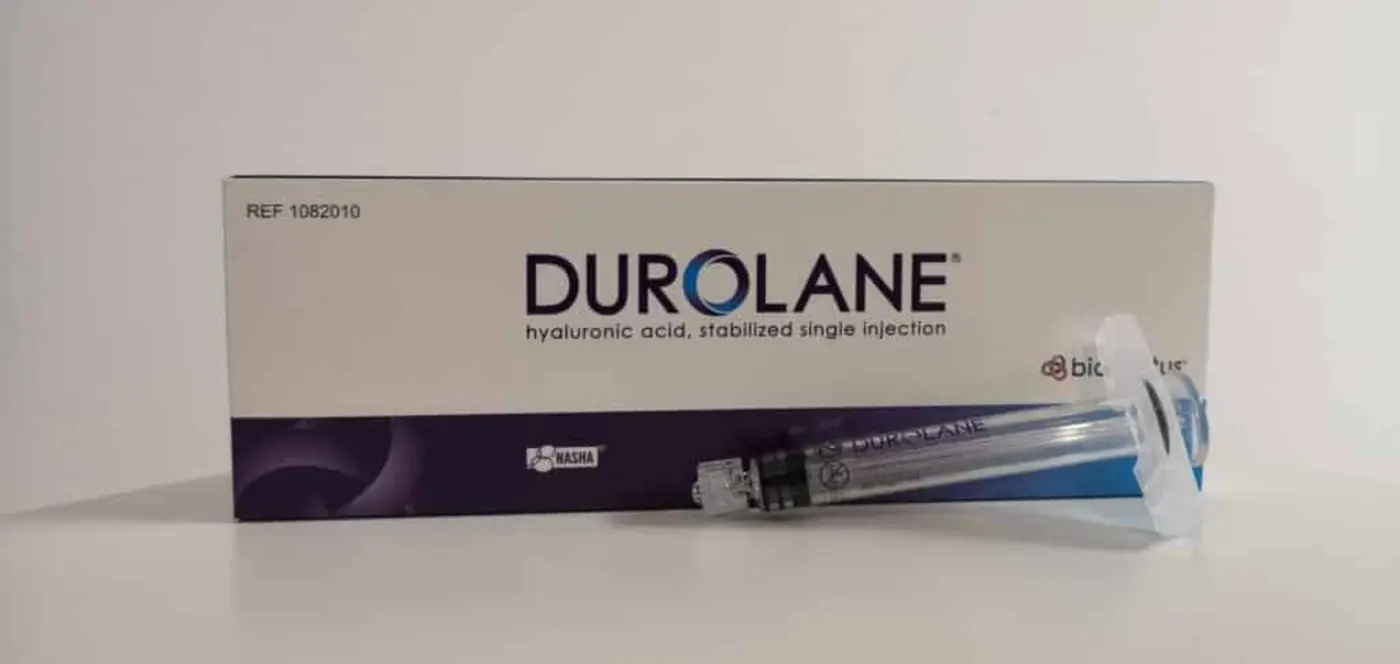
01 · Durolane
60 mg of stabilised HA in 3 mL
Durolane is a single-injection product made using NASHA technology. Its sodium hyaluronate is produced by bacterial fermentation and then stabilised. Its main practical distinctions are its non-animal origin, intermediate volume and stabilised formulation.
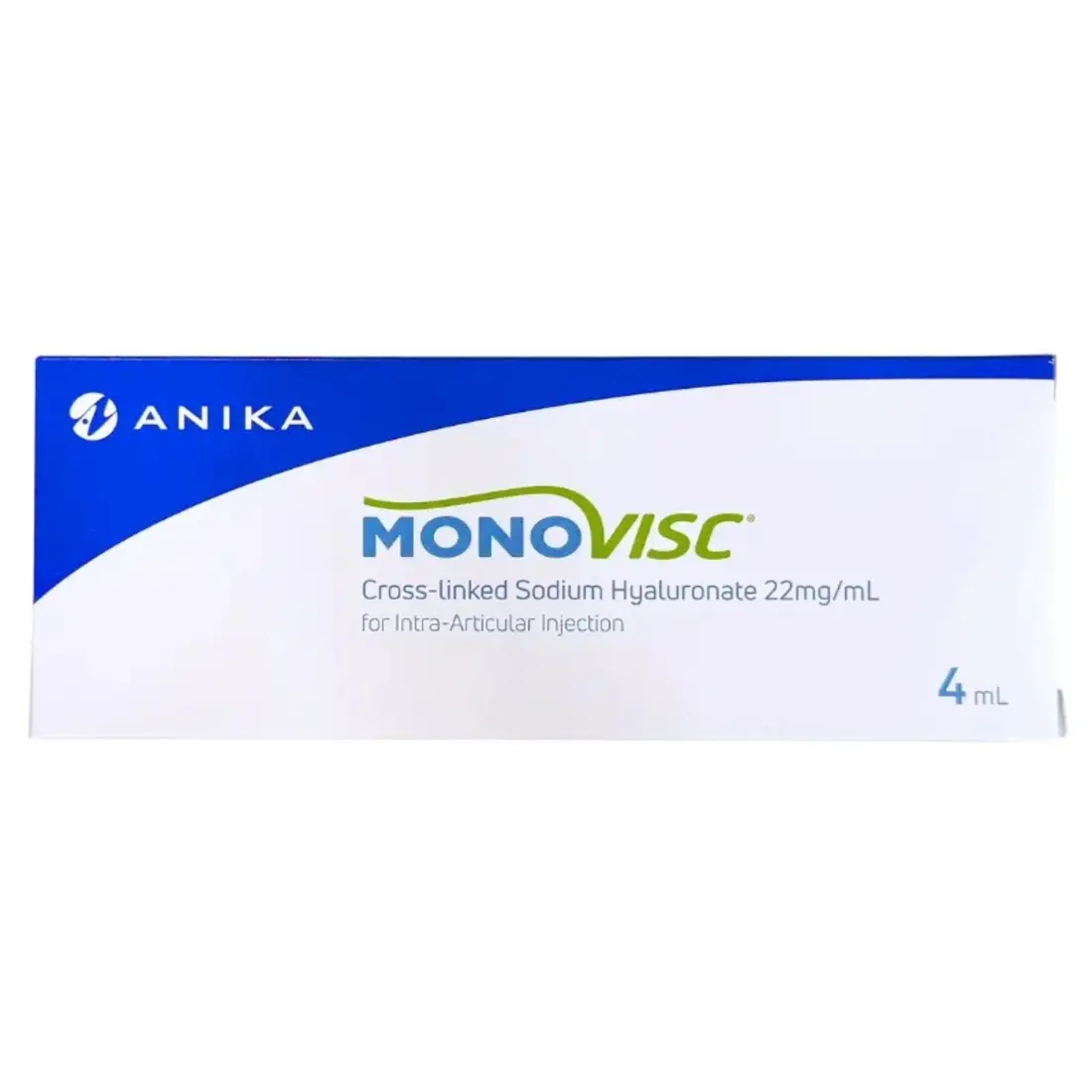
02 · Monovisc
88 mg of cross-linked HA in 4 mL
Monovisc is a single-injection, high-molecular-weight cross-linked sodium hyaluronate produced through bacterial fermentation. Its distinguishing features are the relatively high total HA dose, cross-linked structure and one-injection format.
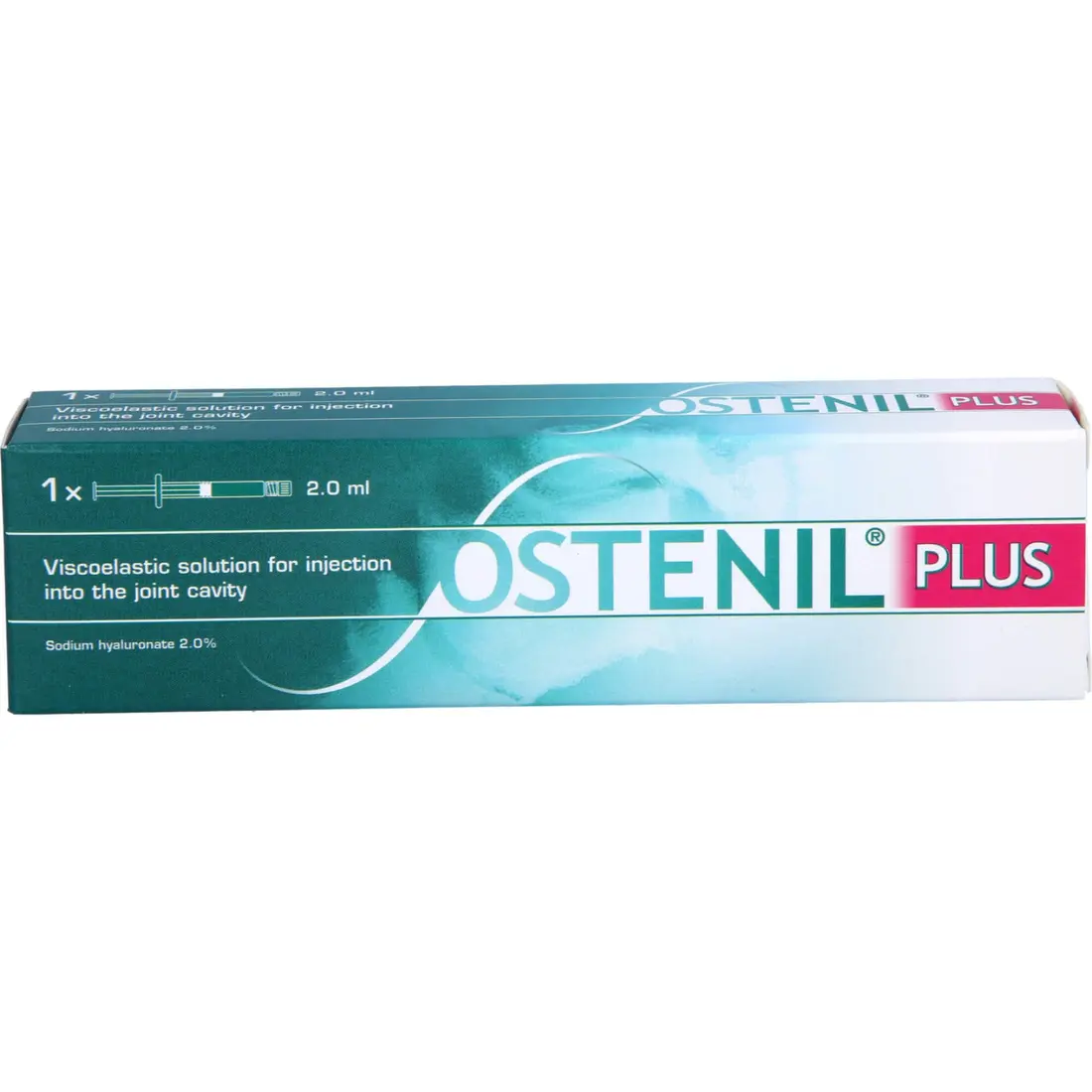
03 · Ostenil Plus
40 mg of sodium hyaluronate in 2 mL
Ostenil Plus contains mannitol as well as sodium hyaluronate. The manufacturer describes mannitol as helping to protect the HA chains from degradation. Its practical distinctions are the smaller injection volume and the mannitol-containing formulation.
Mannitol does not establish that the product will work better or last longer than every alternative.
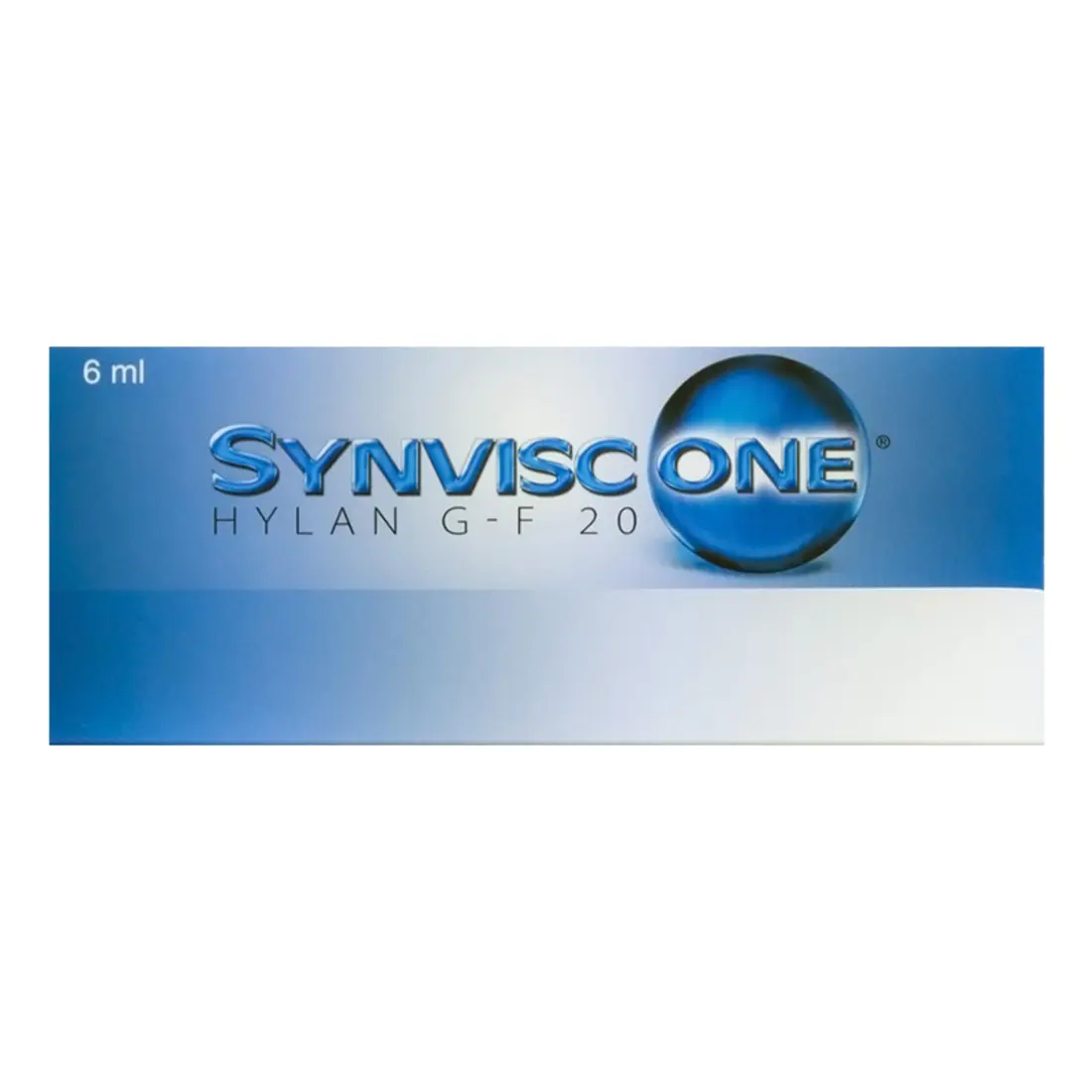
04 · Synvisc-One
48 mg of hylan G-F 20 in 6 mL
Synvisc-One contains cross-linked hylan G-F 20 produced from chicken combs. Its animal origin distinguishes it from the bacterial-fermentation products in this comparison. Manufacturer safety information advises patients to disclose allergies to bird products such as poultry, feathers or eggs.
It also has the largest injection volume in this comparison. That does not make it stronger or more effective.
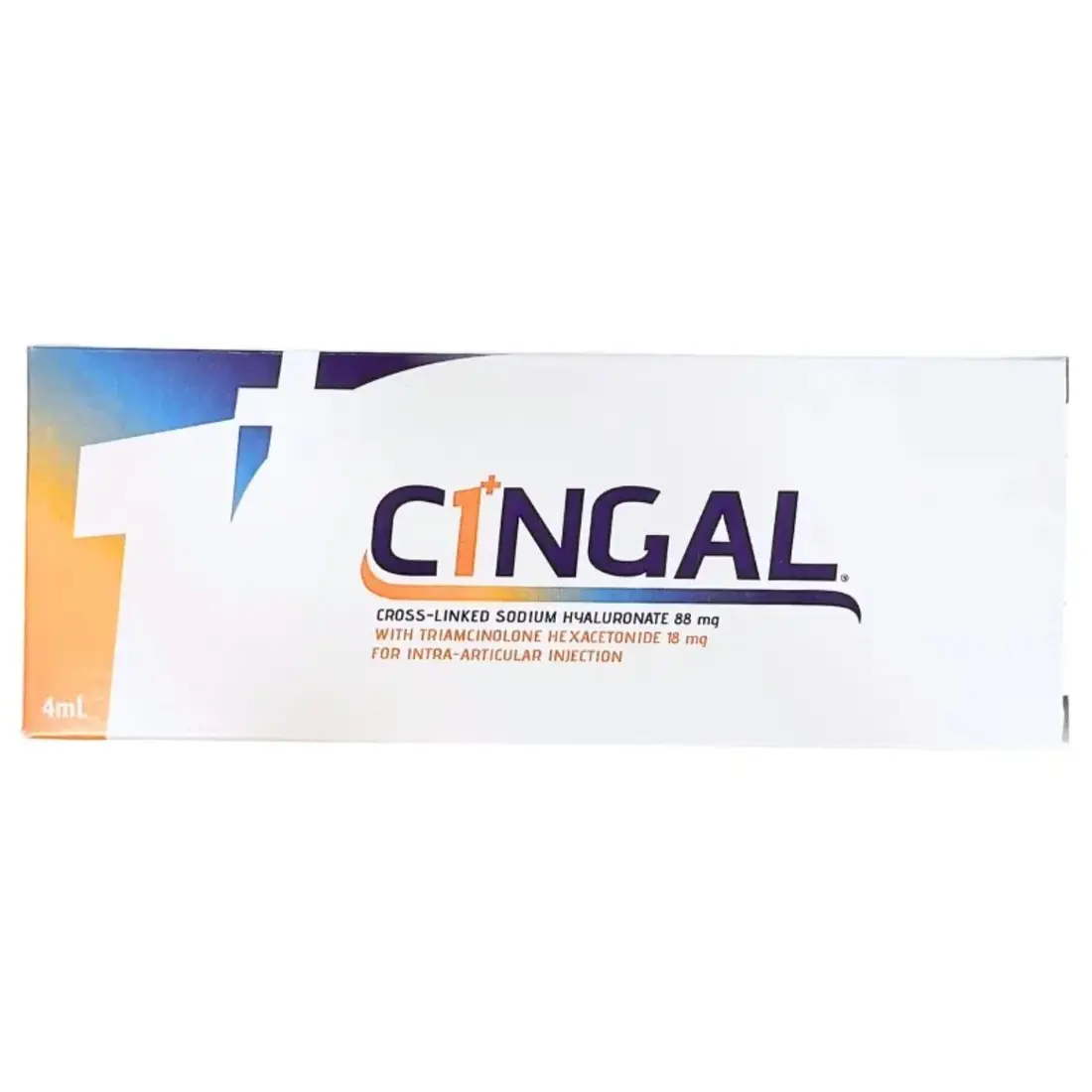
05 · Cingal
88 mg of HA plus 18 mg of corticosteroid in 4 mL
Cingal combines cross-linked HA with triamcinolone hexacetonide. The corticosteroid is intended to provide an earlier anti-inflammatory effect while the HA component is intended for later symptom management.
In a randomised trial involving grade I–III knee osteoarthritis, Cingal produced greater early pain reduction than Monovisc during the initial weeks. The trial did not establish consistent superiority over HA alone beyond that early period.
Because Cingal contains a corticosteroid, diabetes, previous steroid exposure, infection risk and other steroid-specific precautions must be reviewed.
Avoiding misleading comparisons
Does more hyaluronic acid mean a better injection?
Not necessarily. Total milligrams cannot be interpreted in the same way as the strength of a conventional painkiller. The dose sits alongside concentration, molecular weight, structure, cross-linking and volume.
The same caution applies to descriptions such as “high molecular weight”, “stabilised” or “long-lasting”. These describe formulation characteristics. They do not guarantee a particular duration of benefit for an individual patient.
There is also no dependable evidence that a single injection is always more effective than a multi-injection course. A single injection is more convenient, but convenience and clinical superiority are different questions.
Guidelines and research
Where does the evidence stand in 2026?
The evidence remains contested. In the UK, NICE NG226 recommends not offering intra-articular hyaluronan injections to manage osteoarthritis. The American Academy of Orthopaedic Surgeons also states that HA injections are not recommended for routine use in symptomatic knee osteoarthritis.
Other international guidance is more permissive. The 2019 OARSI guideline included intra-articular HA among options that may be considered for selected people with knee osteoarthritis, depending on the clinical and medical profile.
A 2025 umbrella review examined 22 systematic reviews or meta-analyses of randomised placebo-controlled trials. Twenty reported statistically significant improvements in pain or function. However, the authors' interpretations remained mixed, particularly around the size and clinical importance of the average benefit.
Guidelines can therefore reach different conclusions from overlapping evidence because they apply different thresholds for study quality, clinically meaningful improvement, placebo effects, cost effectiveness and acceptable uncertainty.
It is not accurate to say that HA never helps, and it is equally inaccurate to promise that it will work. Some appropriately selected patients report worthwhile improvement; others receive little or no benefit.
Patient selection
Who might reasonably consider an HA injection?
A consultation may be reasonable when:
- Knee osteoarthritis is the likely source of symptoms
- Pain continues despite an appropriate period of exercise and activity management
- Medication options are unsuitable, poorly tolerated or insufficient
- The person understands the NICE position and the possibility of no benefit
- The aim is improved function or participation in rehabilitation—not a cure
- There is no urgent indication for another investigation or specialist opinion
Advanced osteoarthritis does not automatically exclude discussion, but response can be less predictable. An injection should not be used to postpone an appropriate orthopaedic assessment when pain and loss of function remain severe.
Safety
Possible risks and when to seek help
Possible adverse effects include:
- Temporary pain, fullness or stiffness
- Swelling or increased joint fluid
- Bruising or bleeding
- A short inflammatory flare
- An allergic or hypersensitivity reaction
- A severe local inflammatory reaction
- Infection, which is uncommon but potentially serious
- No meaningful improvement
A hot, red or markedly swollen joint, fever, systemic illness or broken or infected skin around the treatment area requires assessment before an elective injection is considered.
Seek urgent medical assessment if pain, swelling, heat or redness becomes progressively worse after an injection—particularly when accompanied by fever, feeling unwell or an inability to bear weight.
Choosing carefully
Which product should be selected?
Product choice should not begin with a brand name. The first question is whether osteoarthritis is genuinely the main source of the symptoms and whether an injection has an appropriate role.
A sensible decision then considers:
- 01The exact joint and diagnosis
The current product instructions must support the proposed use.
- 02HA alone or a steroid combination
A combination product introduces additional steroid-related benefits and risks.
- 03Source and allergies
Animal and bacterial-fermentation products are not interchangeable for every person.
- 04Volume and schedule
The practical difference between 2 mL and 6 mL, and between a single treatment and a course, may matter.
- 05Goals and acceptable uncertainty
The intended functional gain and possibility of no response should be agreed before treatment.
The Resolve approach
Assessment first. Product choice second.
At Resolve MSK Clinic in Hull, an injection is not recommended simply because it is available. The consultation considers the diagnosis, symptoms, function, previous treatment, health history and goals.
We explain the NICE position, the wider international evidence, expected limitations, alternative options and the possibility that treatment may not provide meaningful benefit. Any agreed treatment is connected to a practical plan for exercise, strength, movement and review.
Hyaluronic acid injection consultation in HullYou can also review our knee osteoarthritis treatment options in Hull and our earlier comparison of exercise, steroid injection and hyaluronic acid.
Common questions
Hyaluronic acid knee injection FAQs
Which hyaluronic acid knee injection is best?+
There is no single product that has been shown to be best for every patient. Choice depends on the diagnosis, current product instructions, source, volume, added ingredients, medical history, previous response and the person's preferences.
Does a higher number of milligrams mean a stronger injection?+
No. Total dose cannot be interpreted like the strength of a painkiller. Products also differ in concentration, volume, molecular structure and cross-linking, so the milligram figure alone does not rank clinical effectiveness.
How long does a hyaluronic acid knee injection last?+
Response varies. If it helps, improvement may take time to emerge and may last for several months, but benefit and duration cannot be guaranteed. A lack of response is also possible.
Is Cingal simply a stronger form of hyaluronic acid?+
No. Cingal contains a corticosteroid as well as cross-linked hyaluronic acid. It therefore has additional steroid-related benefits, risks and precautions and should be considered as a combination product.
Can hyaluronic acid regrow knee cartilage?+
There is no reliable evidence that a hyaluronic acid injection regrows lost cartilage or reverses osteoarthritis. It is considered for symptom management, not structural regeneration.
Evidence used
Sources and further reading
- NICE NG226: Osteoarthritis in over 16s—recommendations
- AAOS: Management of Osteoarthritis of the Knee—Non-Arthroplasty (2021)
- Bannuru et al: OARSI guidelines for non-surgical osteoarthritis management (2019)
- Bruyère et al: Umbrella review of HA injections for knee osteoarthritis (2025)
- EUROVISCO consensus on patient characteristics and knee viscosupplementation
- Cingal, Monovisc and saline randomised clinical trial
- TRB Chemedica: Ostenil Plus product information
- Anika: Monovisc product information
- Durolane instructions for use
- Synvisc-One product and safety information
- Anika: Cingal product information
Published and clinically reviewed 23 September 2026. Product information and evidence should be reviewed when material guidance changes, or by September 2027.