
The starting point
Choose a manageable level.
A typical ankle sprain stretches the ligaments on the outside of the ankle. Once a fracture or major injury has been excluded, rehabilitation usually builds movement, strength and balance alongside a gradual return to walking. These examples suit uncomplicated lateral ankle sprains; they are not a programme for every ankle injury.
The 2021 clinical practice guideline recommends a structured exercise programme matched to injury severity and individual needs. It also supports progressive weight bearing with an appropriate brace or tape when indicated. Balance training can help reduce recurrence, but no single exercise prevents every further sprain. Read the ankle sprain guideline.
Use the first movement while the ankle is sensitive; add resistance and standing exercises as walking becomes manageable. Fractures, high ankle sprains, surgery or instructions to limit weight bearing require a different plan. Follow any boot, brace or crutch advice you have been given.
Before you start
Start with movement you can control.
Try a few repetitions first. The amounts below are starting examples, not a requirement to do all four. Use a firm floor and a chair secured against a wall for standing exercises. Supportive footwear is fine even though bare feet make the demonstrations clearer.
Keep early movement comfortable. Mild, brief discomfort may occur later in rehabilitation, but reduce the range, resistance or amount if pain builds, your limp increases, or swelling is clearly worse that evening or next morning. Stop for sharp pain, giving way or continuing deterioration.
Seek urgent advice from NHS 111 after an injury if you cannot bear weight, pain or swelling is severe or worsening, or you feel feverish with a hot joint. Go to A&E for deformity or a newly cold, pale, blue or numb foot. New unexplained calf pain and swelling needs urgent assessment rather than exercise; call 999 if accompanied by chest pain or breathlessness.
Comfortable movement · Exercise 1 of 4
Seated ankle pumps
Practise gentle ankle movement after resting.
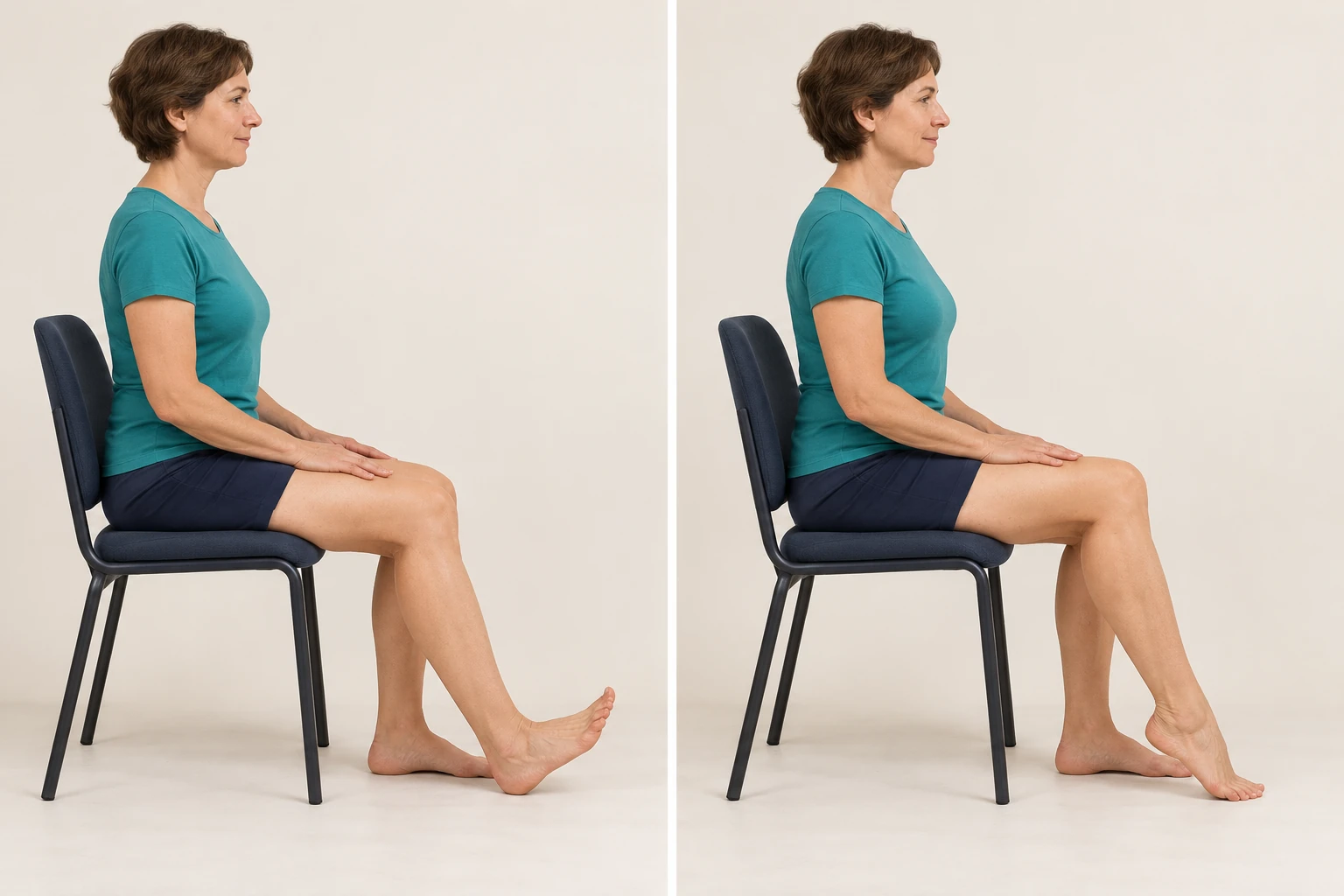
- Sit supported with the foot on the floor.
- Keep the heel down and lift the toes towards the shin.
- Lower the toes, gently lift the heel with the forefoot down, then return. Keep the movement small if sore.
Make it fit: Use a smaller range; do not force the ankle into pain.
- Starting amount
- 1 set
- Repetitions / time
- 5–10 slow movements
- Frequency
- 2–3 brief sessions daily
Strength when tolerated · Exercise 2 of 4
Outward ankle movement with a band
Introduce resistance for the muscles controlling the outside of the ankle.
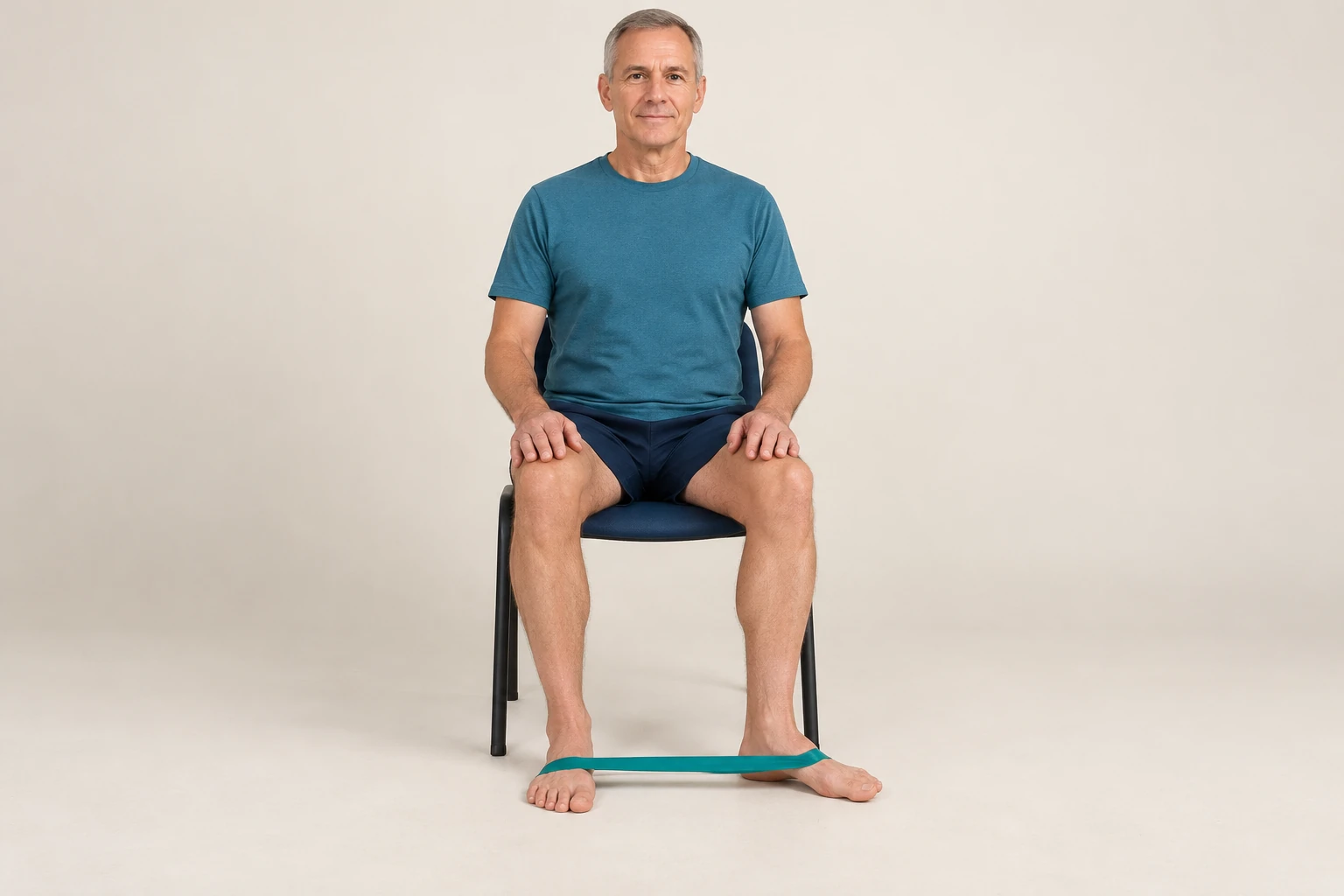
- Sit with a light loop band around both forefeet, behind the toes. Keep both heels down.
- Hold the other foot steady. Move the affected forefoot gently outwards against the band without moving the knee sideways.
- Return slowly. Use a small movement and avoid rolling the whole leg.
Make it fit: Begin without a band if resistance is uncomfortable. Check for a latex allergy before choosing a band.
- Starting amount
- 1 set
- Repetitions / time
- 6–8 controlled repetitions
- Frequency
- 2–3 days weekly; rest a day between
Standing strength · Exercise 3 of 4
Supported double-leg heel raise
Rebuild the push-off strength used in walking and stairs.
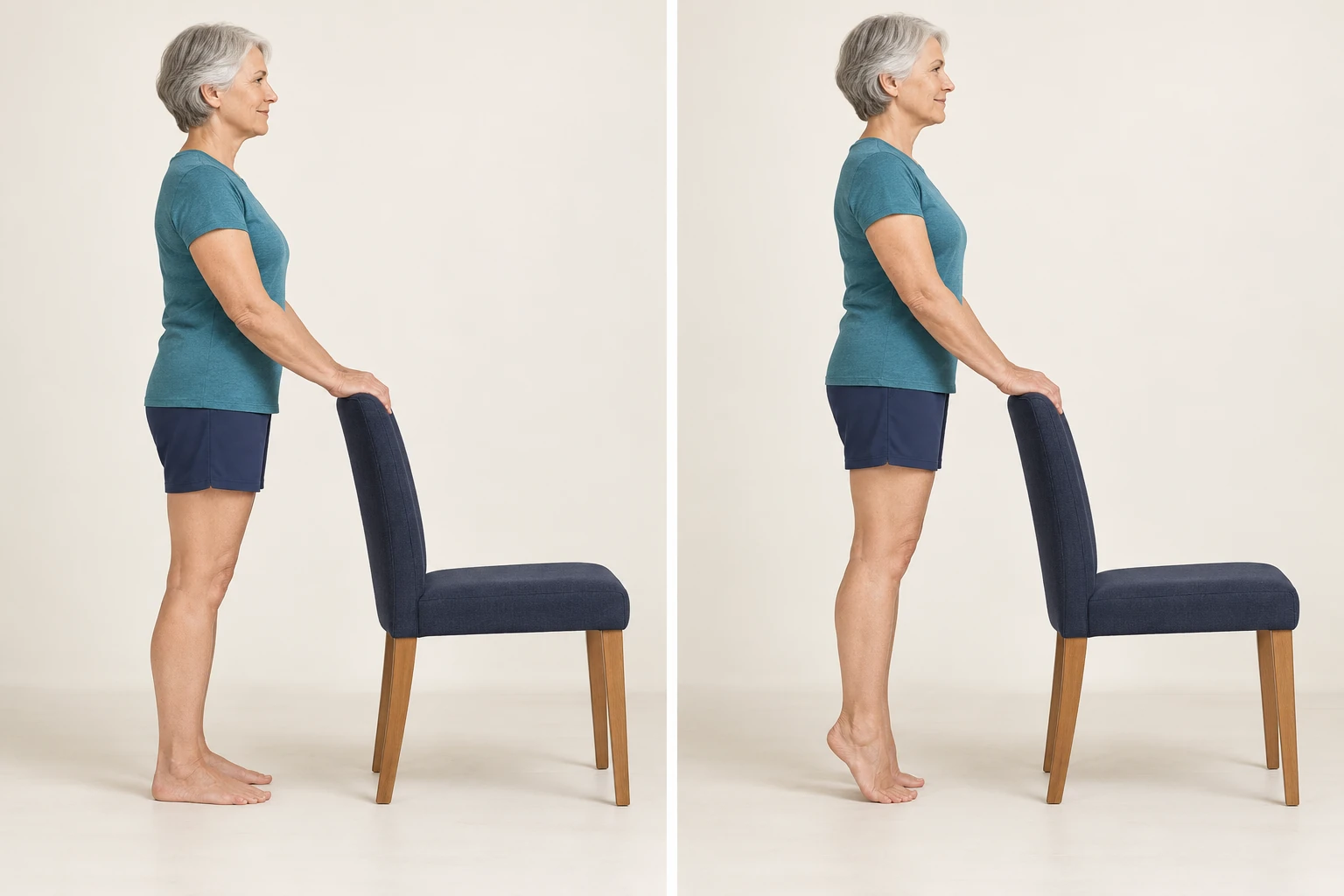
- Stand with feet hip-width apart, hands on a stable chair and weight shared evenly.
- Slowly lift both heels, keeping the knees straight but relaxed.
- Lower under control. Keep the ankles aligned rather than rolling onto the outer edges of the feet.
Make it fit: Start with seated heel raises or a smaller lift if standing is uncomfortable.
- Starting amount
- 1 set
- Repetitions / time
- 5–8 controlled repetitions
- Frequency
- 2–3 days weekly; rest a day between
Control and confidence · Exercise 4 of 4
Supported single-leg balance
Practise control once standing on the injured leg is comfortable.
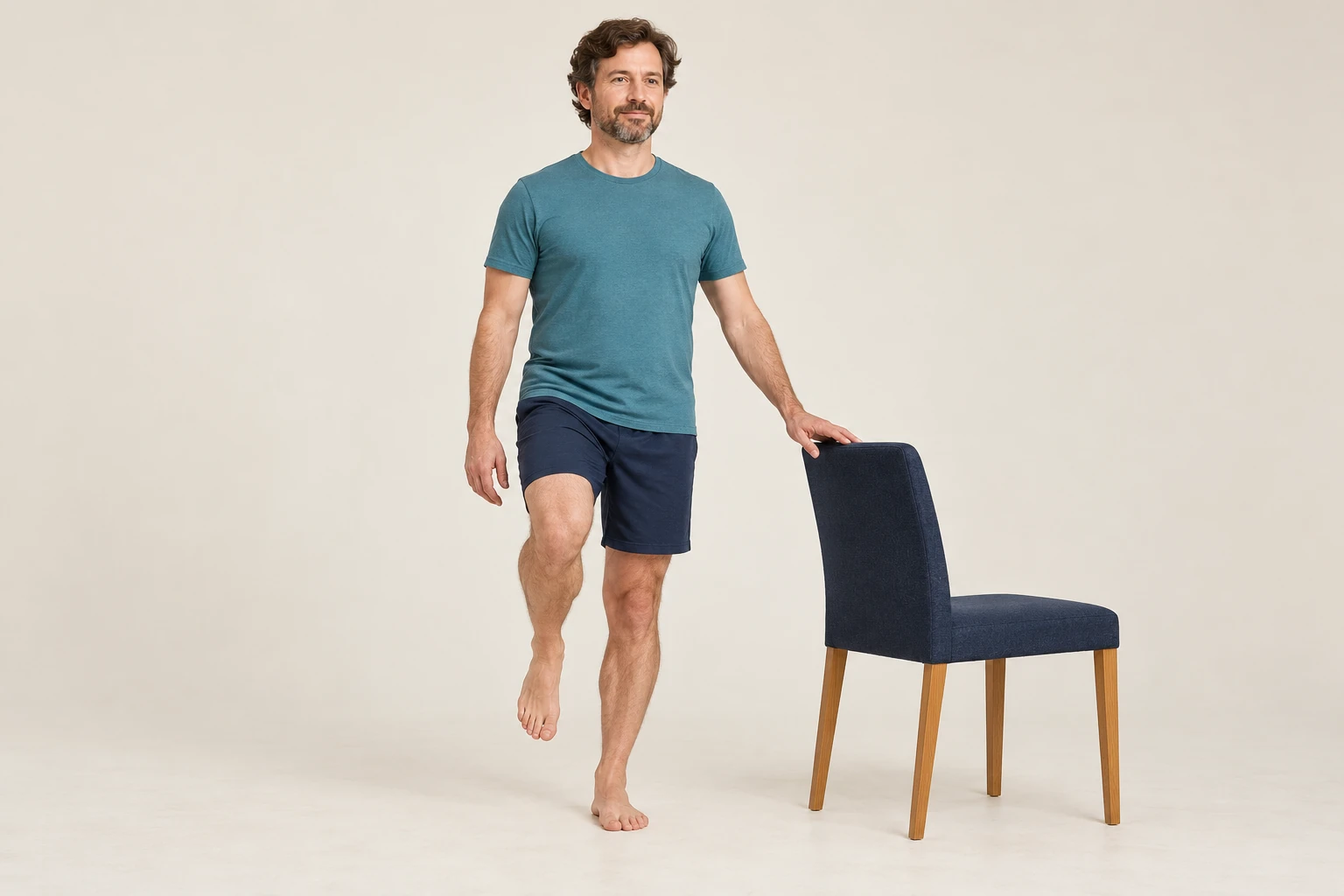
- Stand beside a stable chair and keep fingertip support.
- Shift weight onto the affected leg and lift the other foot slightly. Keep your eyes open and support foot flat.
- Hold steadily, then put the foot down. Stop before the ankle gives way.
Make it fit: Keep both feet down and practise gentle weight shifts first if needed. Avoid unstable surfaces initially.
- Starting amount
- 1 set
- Repetitions / time
- 2–3 holds of 10 seconds
- Frequency
- Once daily if comfortable
Progression
Build walking first, then more demanding tasks.
When several sessions settle well, add a few repetitions or a second set before increasing resistance. Balance can progress towards 20–30 seconds with less hand support. Increase walking gradually without an increasing limp or next-day swelling.
Running, hopping and changes of direction come later. The PAASS return-to-sport framework considers pain, movement and strength, confidence, balance and sport performance. Comfortable walking alone does not establish readiness for a full match. Repeated giving way or a recovery that stalls needs reassessment. Read about ankle injury assessment and treatment in Hull.
Resolve MSK Clinic · Hull & East Riding
Build a programme around your everyday activities.
At 44 Bond Street, Hull, assessment considers your symptoms, movement, strength and the demands of work, home or sport. We can adjust exercise selection, check technique and plan progression around your goals.
We can assess walking, ankle movement, strength and balance, then progress towards the demands of your job, running or sport. Imaging is considered when a specific clinical question could change management.
See what an appointment involves on our private physiotherapy in Hull page, or find the clinic on Bond Street.
Sources and image credits
Where this advice comes from.
This guide brings together ankle sprain guidance, NHS patient advice and the PAASS expert consensus. The exact four-exercise combination has not been tested as a single treatment package. The images are newly AI-generated demonstrations, not patient photographs or diagnostic images. The exercise instructions are written for this guide.
Starting amounts are cautious examples rather than a tested universal prescription. Change the range, support, repetitions and resistance to suit your assessment and response.
- Martin et al. (2021): lateral ankle sprain clinical practice guideline
- Smith et al. (2021): PAASS return-to-sport consensus
- Hull University Teaching Hospitals: ankle sprain advice
- Worcestershire Acute Hospitals: ankle sprain exercise progression
- NHS: ankle pain and urgent warning signs
- NHS: deep vein thrombosis symptoms and urgent action
Sources checked 18 October 2026. General information, not an individual diagnosis or prescription. Review due October 2027, or sooner if guidance materially changes.