The starting point
Choose a manageable level.
A calf strain injures fibres in the gastrocnemius or soleus muscle. Walking, stairs and pushing off may become painful. Use this guide after the injury has been assessed as a calf strain: new calf pain is not always a muscle injury, and an Achilles rupture or blood clot needs a different pathway.
Local NHS advice supports gentle early movement followed by strengthening as pain and walking improve. Research on the ideal calf strain exercise dose is limited; a study of 20 expert sports clinicians supports individual progression towards strength, running and sport demands, but it is not a trial proving one routine is best. Read the Hull NHS calf strain advice.
In the early days, shorten walks and avoid running, jumping, forceful stretching and deep massage over the injury. Keep the ankle moving gently within comfort, for example lifting the toes then the heel while seated. Add the strength stages below as symptoms settle; they are not all day-one exercises.
Before you start
Progress when the current stage is comfortable.
Start with a few slow repetitions. Use seated work before standing if walking is still sore. Begin standing raises only when you can bear weight comfortably and lift the heels without pain. A stable chair against a wall provides support; shoes can be worn.
Keep these early healing exercises pain-free. Do not push through a sharp pull. Reduce the amount if soreness, swelling or limping increases afterwards or the following morning. Later loading may need a clinician's individual guidance; a pain score alone cannot confirm readiness.
Seek urgent assessment through your GP or NHS 111 for new or unexplained one-sided calf swelling, warmth, colour change or increasing tenderness, especially after surgery or immobility. Call 999 if leg pain and swelling come with breathlessness or chest pain. A sudden snap, a feeling of being kicked behind the ankle, or inability to push off needs prompt assessment for an Achilles rupture. Do not test it repeatedly with heel raises.
Lower-load strength · Exercise 1 of 3
Seated double-leg heel raise
Begin calf loading with less body weight through the legs.
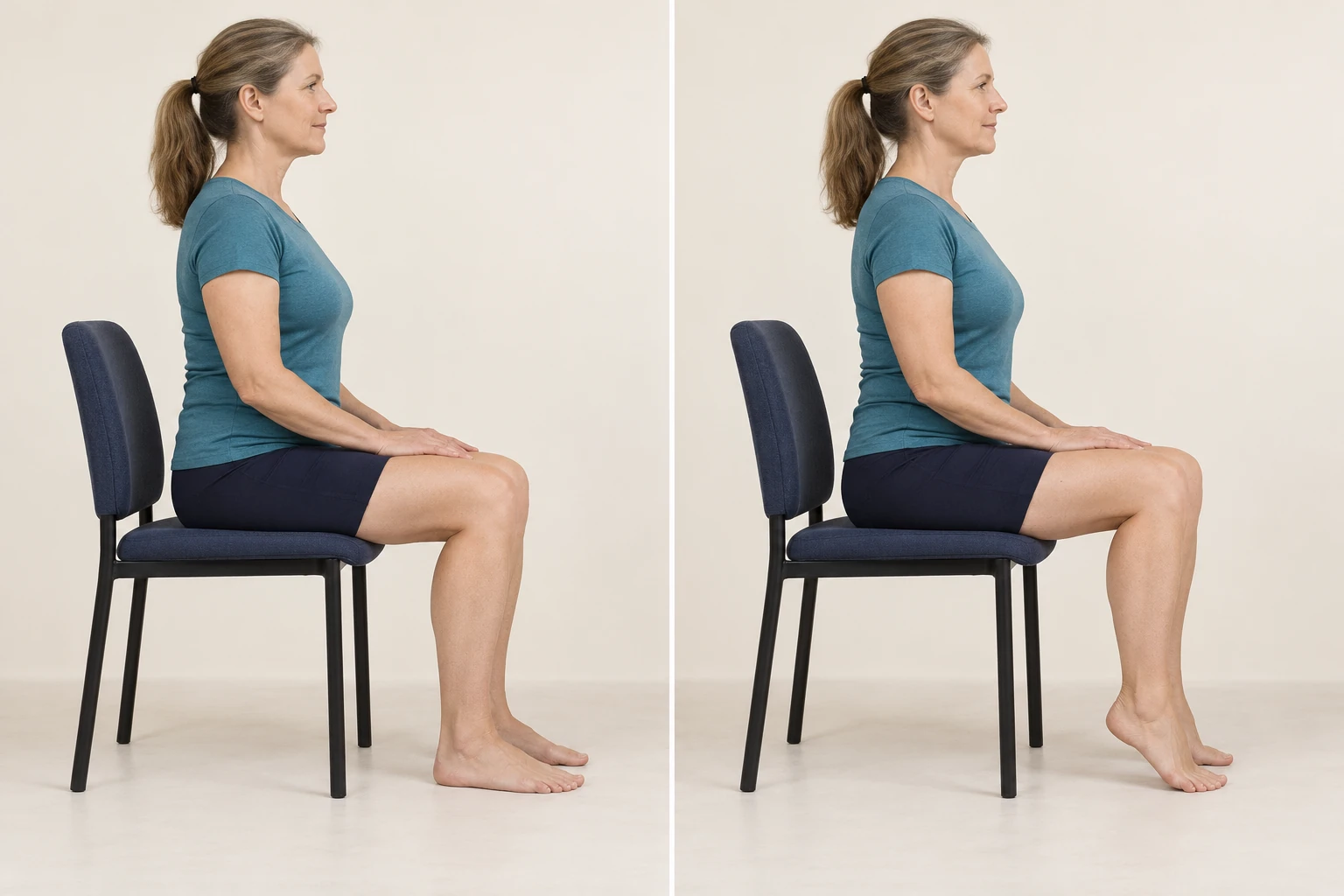
- Sit on a firm chair with feet hip-width apart and knees bent about 90 degrees.
- Keep the toes and forefeet down as you lift both heels gently.
- Pause briefly, then lower slowly. Start without added weights.
Make it fit: Make the lift smaller or return to gentle ankle movement if this pulls at the injury.
- Starting amount
- 1 set
- Repetitions / time
- 5–8 comfortable repetitions
- Frequency
- 2–3 days weekly; rest a day between
Standing strength · Exercise 2 of 3
Supported double-leg heel raise
Rebuild calf strength for walking and stairs once standing raises are pain-free.
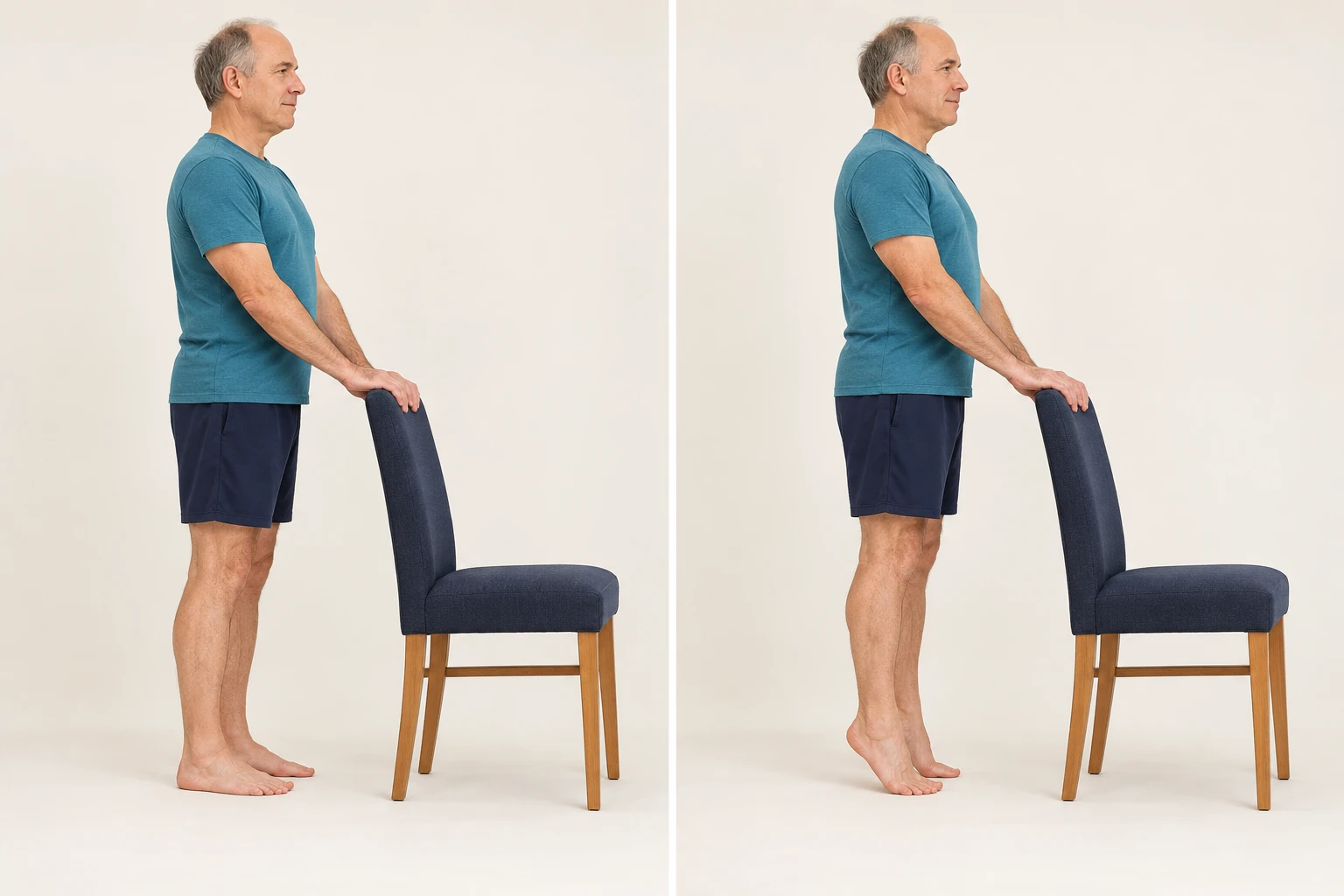
- Stand holding a stable chair, feet hip-width apart and weight shared evenly.
- Keep the knees straight but unlocked and rise onto both forefeet.
- Lower slowly to the floor. Avoid bouncing or dropping the heels below a step.
Make it fit: Stay with seated raises if you cannot share weight evenly or need to lean heavily on your arms.
- Starting amount
- 1 set
- Repetitions / time
- 5–8 comfortable repetitions
- Frequency
- 2–3 days weekly; rest a day between
Later progression · Exercise 3 of 3
Supported single-leg heel raise
Introduce more demanding loading after repeated double-leg raises and normal walking are comfortable.
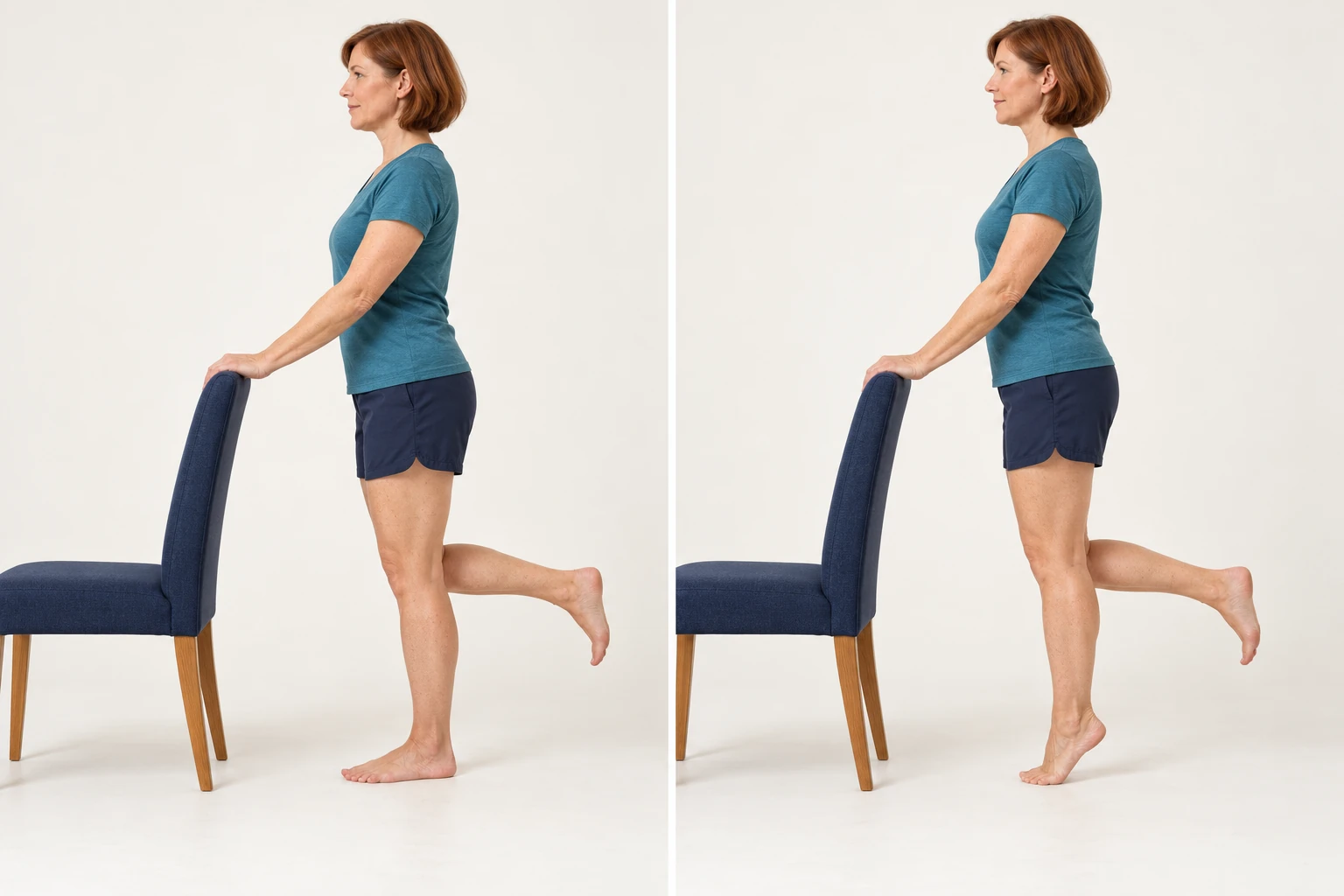
- Hold the chair and lift the uninjured foot slightly off the floor.
- Raise the heel on the affected side through a comfortable range, keeping the knee straight but relaxed.
- Lower slowly and stop before technique changes. This is a progression, not a starting test for a new injury.
Make it fit: Keep both feet down and shift a little more weight towards the affected side before trying one leg alone.
- Starting amount
- 1 set
- Repetitions / time
- 3–5 controlled repetitions
- Frequency
- 2–3 days weekly; rest a day between
Progression
Prepare the calf for the activity you want to regain.
Build repetitions before adding sets or resistance, changing one thing at a time. Both bent-knee and straight-knee strength may need progressing. Add comfortable calf stretching only when the early pain has settled; a strong stretch is not required for healing.
Before running, aim for comfortable brisk walking, useful ankle movement and controlled repeated calf raises. Hopping, jogging and faster or longer efforts follow gradually when tolerated. Strength, endurance, confidence and the next-day response all matter; no single repetition target or fixed number of weeks clears everyone for sport. Seek review if progress stalls or symptoms recur. Read about sports injury assessment and treatment in Hull.
Resolve MSK Clinic · Hull & East Riding
Build a programme around your everyday activities.
At 44 Bond Street, Hull, assessment considers your symptoms, movement, strength and the demands of work, home or sport. We can adjust exercise selection, check technique and plan progression around your goals.
We can assess the likely injury, walking and calf capacity, then build a staged return to work, running or sport. Ultrasound may help selected soft-tissue questions when it would change care. It does not replace an urgent medical pathway for a suspected blood clot or clear someone for sport by itself.
See what an appointment involves on our private physiotherapy in Hull page, or find the clinic on Bond Street.
Sources and image credits
Where this advice comes from.
The guide combines NHS calf injury advice with a published qualitative study of expert sports clinicians. The later progression reflects clinical principles, not proof that this exact sequence is superior. The images are newly AI-generated demonstrations, not patient photographs or diagnostic images. The exercise instructions are written for this guide.
Starting amounts are cautious examples rather than a tested universal prescription. Change the range, support, repetitions and resistance to suit your assessment and response.
- Hull University Teaching Hospitals: calf strain advice, updated June 2025
- Green et al. (2022): practices and perspectives of 20 expert clinicians
- NHS inform: exercises for calf and ankle problems
- NHS: deep vein thrombosis symptoms and urgent action
- Hull University Teaching Hospitals: Achilles tendon rupture information
Sources checked 18 October 2026. General information, not an individual diagnosis or prescription. Review due October 2027, or sooner if guidance materially changes.