
The starting point
Choose a manageable level.
A hamstring strain injures muscle or tendon fibres at the back of the thigh, often during running or a sudden stretch. Severity varies. Use these options after an assessment where needed, once symptoms allow gentle loading. A major tear, tendon avulsion, recent repair or pain referred from the back needs a different plan.
The 2022 clinical practice guideline supports progressive rehabilitation including eccentric strengthening, where the muscles work while lengthening. The 2023 London consensus emphasises individual progression, running exposure and the demands of the sport. These three exercises are entry points; later strengthening and running stages are needed for a full sporting return. Read the hamstring injury guideline.
In the first few days, avoid sprinting, forceful hamstring stretching and deep massage over the injury. Modify painful activity, then gradually restore comfortable walking and movement. Begin loading gently as pain settles; progress by function and response rather than by a fixed week number.
Before you start
Begin gently and avoid a sharp pulling pain.
Try a few low-effort heel digs first. Add bridges as these and ordinary movement become comfortable. The standing hinge is a later option, once walking and basic loading are manageable. Follow any individual restrictions from your treating clinician.
Keep these early exercises pain-free and controlled. Stop for a sharp pull, new weakness or increasing pain. Reduce the range or amount if walking worsens, bruising or swelling increases, or soreness is clearly worse the following morning. Later, more demanding rehabilitation may use different limits set with your clinician.
Seek urgent NHS 111 advice for severe or worsening pain, extensive bruising or swelling, difficulty standing or walking, or fever with feeling unwell. A sudden pop near the buttock with marked weakness or bruising needs prompt assessment for a possible tendon avulsion. New unexplained one-sided calf swelling also needs urgent medical assessment; call 999 if accompanied by chest pain or breathlessness.
Early low-effort loading · Exercise 1 of 3
Gentle heel dig
Introduce a gentle hamstring contraction without moving the leg.
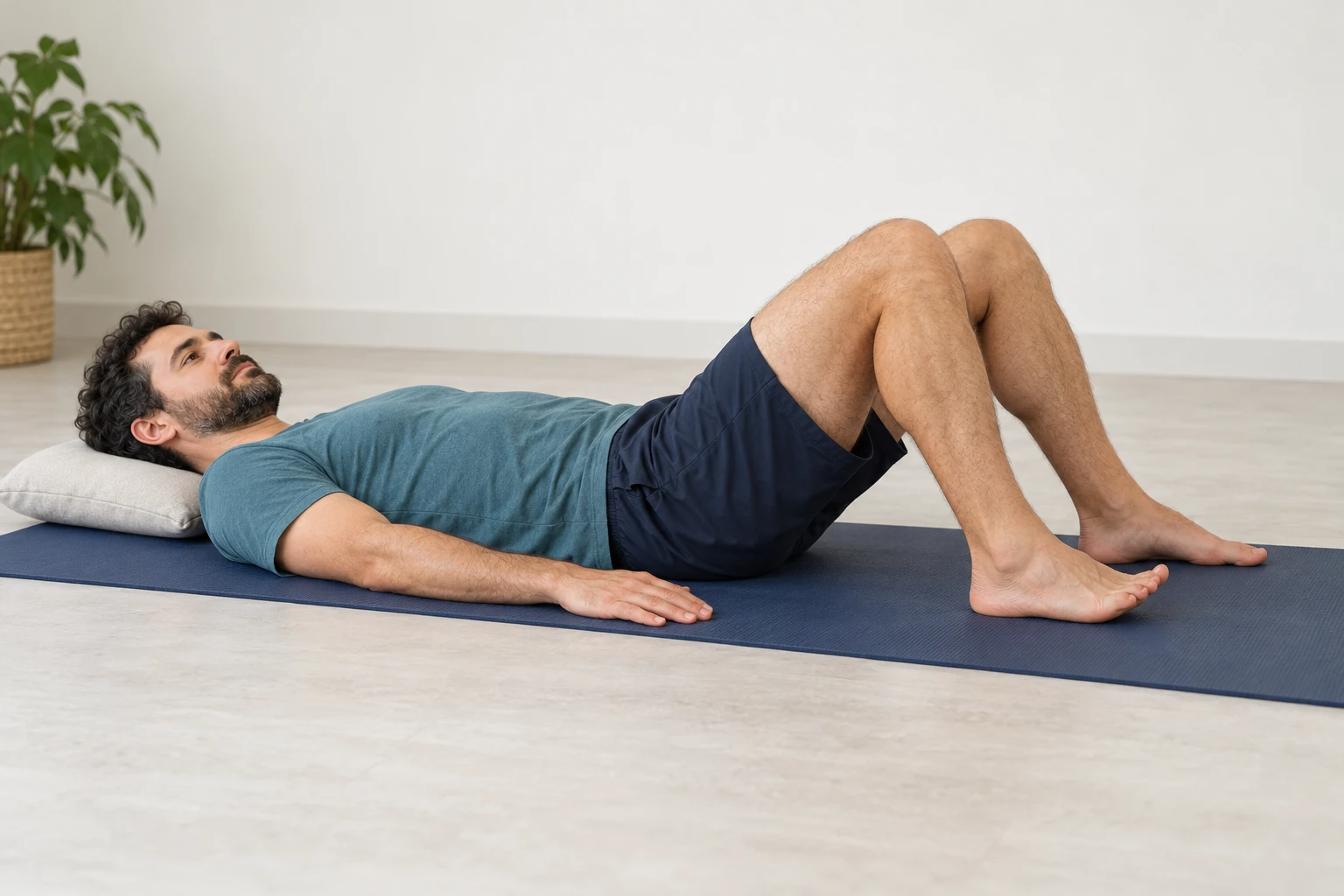
- Lie on your back with knees comfortably bent and heels supported on the floor or a firm bed.
- Press the affected-side heel gently down as if trying to drag it towards you, without actually moving it.
- Keep the pelvis down, hold lightly for up to 5 seconds, then relax fully. Breathe normally.
Make it fit: Use less pressure or a shorter hold. Do not test maximum strength in a new injury.
- Starting amount
- 1 set
- Repetitions / time
- 4–5 holds, up to 5 seconds each
- Frequency
- Once daily if comfortable
Further comfortable loading · Exercise 2 of 3
Double-leg bridge
Build shared hip and hamstring loading with both feet supported.
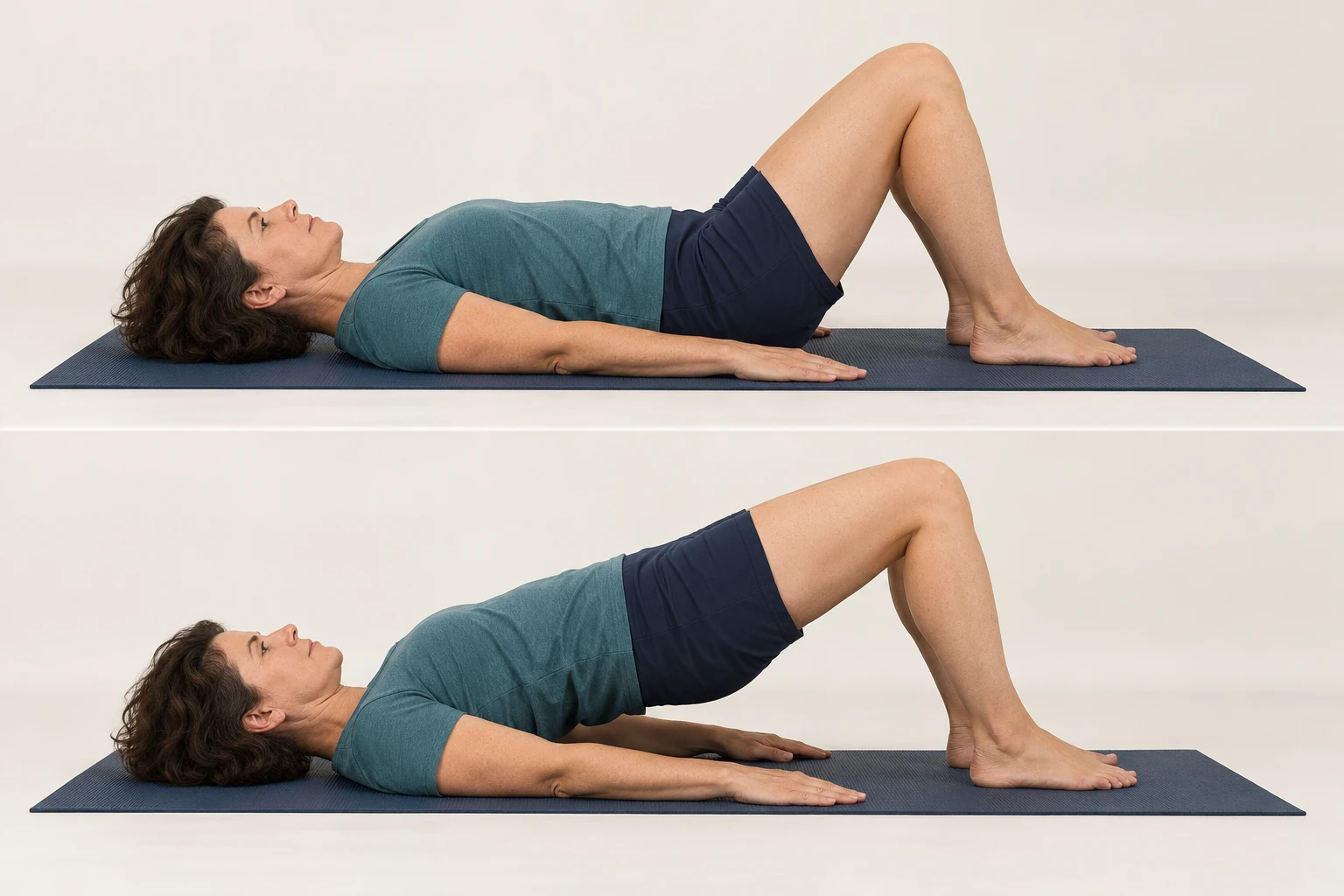
- Lie on your back with feet flat, hip-width apart and knees bent. Keep your arms beside you.
- Press through both feet and lift the pelvis to a comfortable height, without arching the lower back.
- Pause briefly and lower slowly. Keep the weight shared evenly and stop before a sharp pull or cramp.
Make it fit: Use a smaller lift. If it hurts, return to gentle heel digs rather than forcing the bridge.
- Starting amount
- 1 set
- Repetitions / time
- 5–8 slow repetitions
- Frequency
- 2–3 days weekly; rest a day between
Later movement and strength · Exercise 3 of 3
Bodyweight hip hinge
Practise controlled loading as the hip bends, once walking and bridges are comfortable.
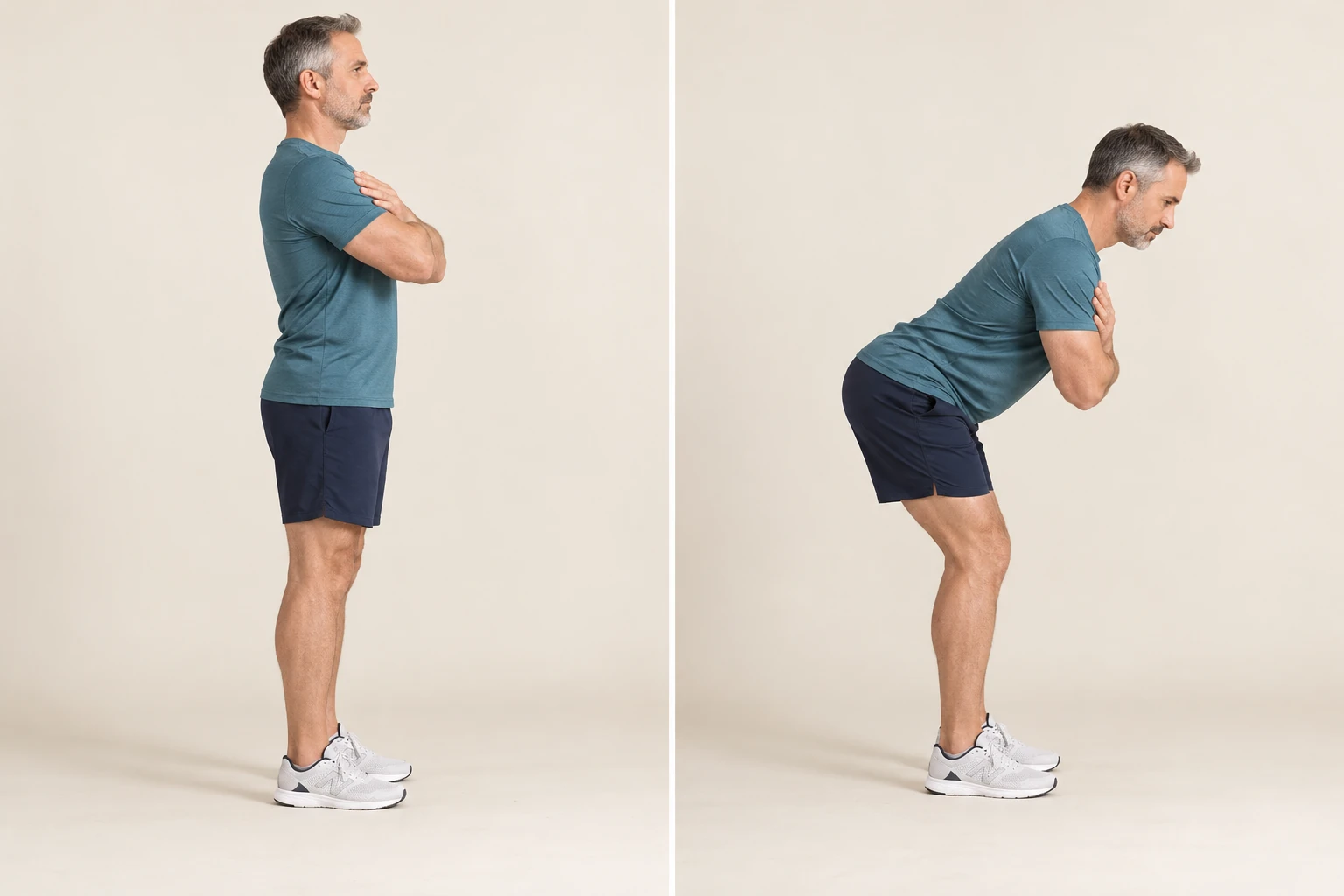
- Stand with feet hip-width apart and knees slightly soft. Start without a weight.
- Move the hips backwards and lean forwards from the hips through a small, comfortable range. Keep the back in a natural position.
- Return slowly to standing. Do not chase a strong stretch or turn the movement into a deep squat.
Make it fit: Reduce the forward lean or use light hand support. Add range and resistance only when the response is settled.
- Starting amount
- 1 set
- Repetitions / time
- 5–6 slow repetitions
- Frequency
- 2–3 days weekly; rest a day between
Progression
Rebuild capacity before returning to full speed.
Add repetitions, a second set or modest resistance one change at a time. Later work may include resisted knee curls, controlled slider exercises or assisted Nordic exercises. These introduce more demanding lengthening loads and need an appropriate starting level; they are not automatic day-one exercises.
Running is reintroduced gradually after comfortable walking and suitable strength and movement checks. Build jogging, faster running and sport drills in stages. Sprinting should be pain-free, with confidence and tolerance of repeated efforts restored. Feeling better during a short jog does not establish match readiness; previous injury and recurrence risk also matter. Read about sports injury assessment and treatment in Hull.
Resolve MSK Clinic · Hull & East Riding
Build a programme around your everyday activities.
At 44 Bond Street, Hull, assessment considers your symptoms, movement, strength and the demands of work, home or sport. We can adjust exercise selection, check technique and plan progression around your goals.
We can assess the injury pattern, walking, strength and relevant hip or back symptoms, then plan a return to work, running or sport. Imaging may be useful for a suspected major tendon injury or an uncertain diagnosis, but recovery decisions also require examination and functional testing.
See what an appointment involves on our private physiotherapy in Hull page, or find the clinic on Bond Street.
Sources and image credits
Where this advice comes from.
This guide uses the 2022 hamstring clinical practice guideline, the 2023 London consensus and NHS injury advice. The 2026 SONAFE-Brazil guideline is also linked for further professional reading. Instructions are original and the demonstrations are newly AI-generated images, not patient photographs. The exact three-exercise combination has not been tested as one treatment programme.
Amounts are conservative starting examples. A rehabilitation plan may need different exercises, heavier resistance and further stages according to the assessment and your response.
- Martin et al. (2022): hamstring strain injury clinical practice guideline
- Paton et al. (2023): London consensus on rehabilitation, running and return to sport
- Baroni et al. (2026): SONAFE-Brazil hamstring rehabilitation guideline
- NHS: hamstring injury and when to seek help
- Northern Care Alliance NHS: hamstring strain advice and exercises
- NHS: deep vein thrombosis symptoms and urgent action
Sources checked 1 November 2026. General information, not an individual diagnosis or prescription. Review due November 2027, or sooner if guidance materially changes.