
Leg-dominant pain
Sharp, burning or electric pain travelling from the buttock into the back or side of one leg, sometimes reaching the foot or toes.
Sciatica care in Hull
A focused assessment of back and leg symptoms to determine whether the pattern fits sciatica, another referred problem or a condition requiring investigation or specialist review.
Understanding the problem
Sciatica occurs when a nerve root supplying the sciatic nerve is irritated or compressed. Symptoms commonly travel from the lower back or buttock into one leg and may include sharp or burning pain, tingling, numbness or weakness. Leg pain is often more prominent than back pain.
Pain in the buttock, thigh or calf can also arise from the lower back without nerve-root involvement, or from the hip, muscles, tendons and other structures. The diagnosis should therefore be based on the history and clinical examination rather than pain location alone.
Symptoms and function
Sharp, burning or electric pain travelling from the buttock into the back or side of one leg, sometimes reaching the foot or toes.
Pins and needles or reduced sensation following part of the leg or foot.
Difficulty with movements such as lifting the foot, pushing through the toes or completing usual walking and activity.
Pain may change with sitting, bending, walking, coughing or sneezing, although no single feature confirms the diagnosis.
Back pain may be present, but sciatica is usually characterised by the nerve-related leg symptoms.
Symptoms interfering with sleep, driving, work, caring responsibilities, exercise or normal mobility.
Clinical differences
Often produces leg-dominant pain in a nerve-related pattern, sometimes with tingling, numbness, weakness or altered reflexes.
Can spread into the buttock or thigh but may not produce objective changes in strength, sensation or reflexes.
May be felt in the groin, outer hip, buttock or thigh and can be influenced by weight-bearing or hip movement.
May be more localised and load-related, but tenderness or tightness alone does not reliably identify the source.
If symptoms are mainly confined to the back without nerve-related leg pain, our broader back-pain page explains the assessment and rehabilitation pathway.
Read about back pain assessment and physiotherapy in HullAssessment
Questions about bladder, bowel and saddle sensation, both legs, severe weakness, trauma, general health and other warning signs.
Where pain, tingling or numbness travels and how it changes with position, movement, coughing, walking or activity.
Key lower-limb movements are compared to look for a pattern that may indicate a particular nerve root is affected.
Skin sensation and relevant tendon reflexes may be checked when the presentation suggests nerve involvement.
Selected tests may help determine whether neural tissue is sensitive, interpreted alongside the rest of the examination.
Spinal movement, walking and hip findings help distinguish sciatica from referred, hip-related or muscular presentations.
Evidence-informed care
You receive a clear account of the likely diagnosis, expected course and the signs that would require further review.
NHS advice encourages continuing normal activities as much as possible and avoiding prolonged sitting or lying down.
Movement, strength and nerve-related exercise are selected and progressed according to your response rather than prescribed as one routine for everyone.
Mobilisation or soft-tissue treatment may support comfort and movement, but NICE recommends using it only within a package that includes exercise.
Sitting, walking, lifting, driving, work and exercise are rebuilt in manageable stages.
Strength, sensation, function and symptom behaviour are reassessed, with referral recommended if the presentation changes or does not progress appropriately.
For a practical starting point, see our illustrated guide to five gentle sciatica exercises. The exercises are options rather than a fixed routine, with guidance on symptom response and when to stop.
Investigation and onward care
A scan is not routinely required simply because leg pain is present. NICE recommends considering imaging in specialist care only when the result is likely to change management.
Referral may be appropriate when pain is severe or persistent despite suitable non-surgical care, when neurological findings are significant or worsening, or when the diagnosis remains uncertain. A specialist may then consider imaging and options such as an epidural or surgical opinion where clinically indicated; Resolve MSK Clinic does not provide spinal injections or spinal surgery.
Progressive weakness, expanding numbness or a meaningful change in reflexes or function requires timely medical review.
Ongoing severe leg pain or major functional restriction may justify specialist assessment when appropriate rehabilitation has not been sufficient.
Further investigation or another clinical opinion may be needed when symptoms and examination findings do not form a clear pattern.
Your local clinic
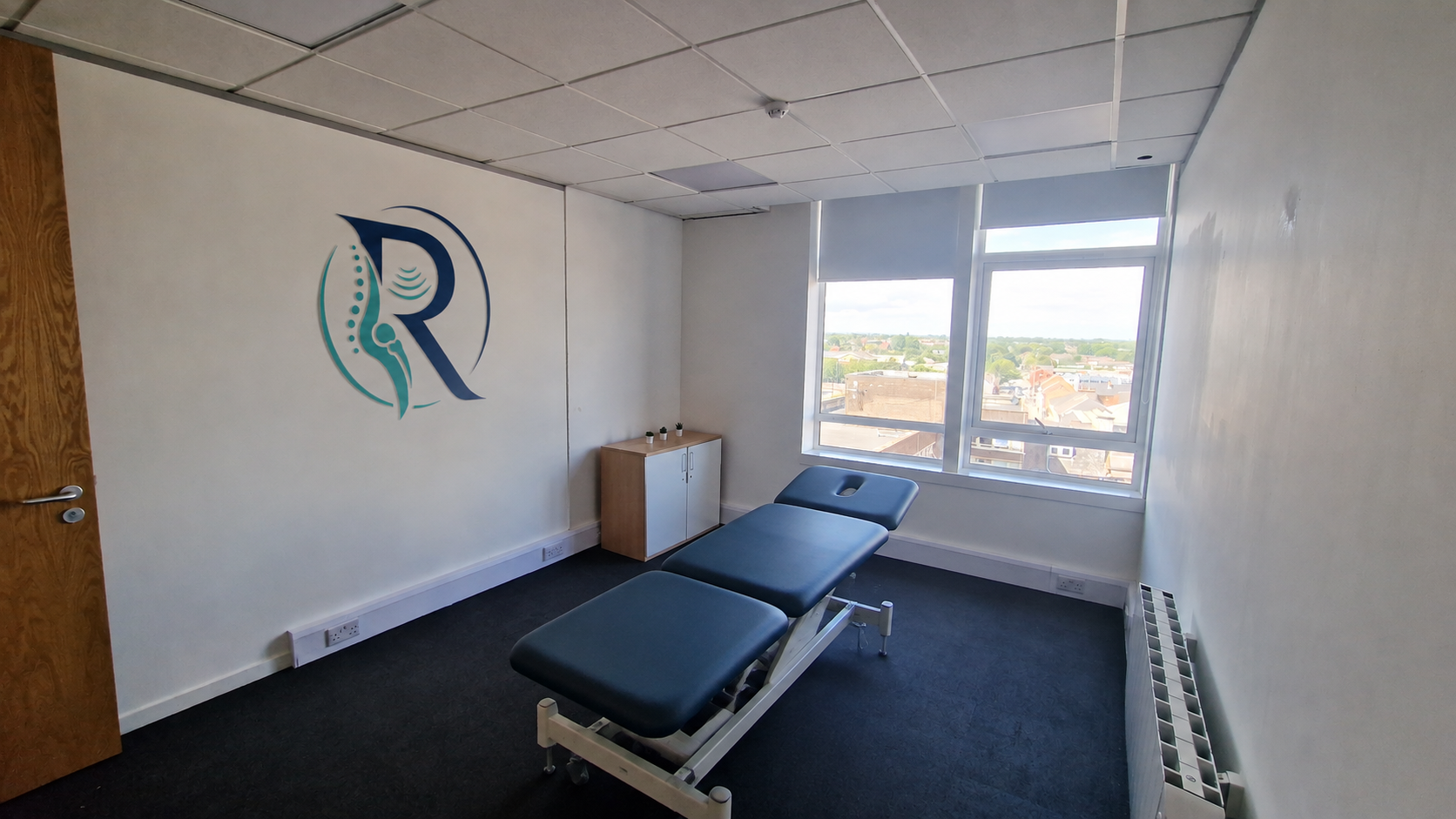
Your appointment takes place one-to-one at Resolve MSK Clinic, 44 Bond Street, Hull. The first priority is to understand the nerve-related symptoms, check neurological function and explain whether rehabilitation is appropriate or whether another pathway should come first.

Clinical lead
Kenneth has more than seven years' clinical experience and also works in NHS primary care across Hull and East Yorkshire. Assessment, rehabilitation and prescribing decisions remain within clinical scope and are based on individual need.
Clinical guidance
Common questions
No. Back-referred pain, hip conditions, muscles, tendons and other structures can produce buttock or leg symptoms. Sciatica is more specifically associated with irritation of a nerve root and should be assessed in context.
Not routinely. NICE recommends imaging in specialist care when the result is likely to change management. The history, neurological examination and progress usually guide whether referral for imaging is appropriate.
Physiotherapy can provide assessment, exercise advice, graded rehabilitation and appropriate manual therapy as part of an active treatment plan. Response varies, and significant or worsening neurological findings require medical or specialist review.
The NHS advises that it often improves within a few weeks to a few months, but it can last longer or recur. The expected course depends on symptom severity, neurological findings, general health and response to management.
Resolve MSK Clinic · 44 Bond Street, Hull